The man behind the name
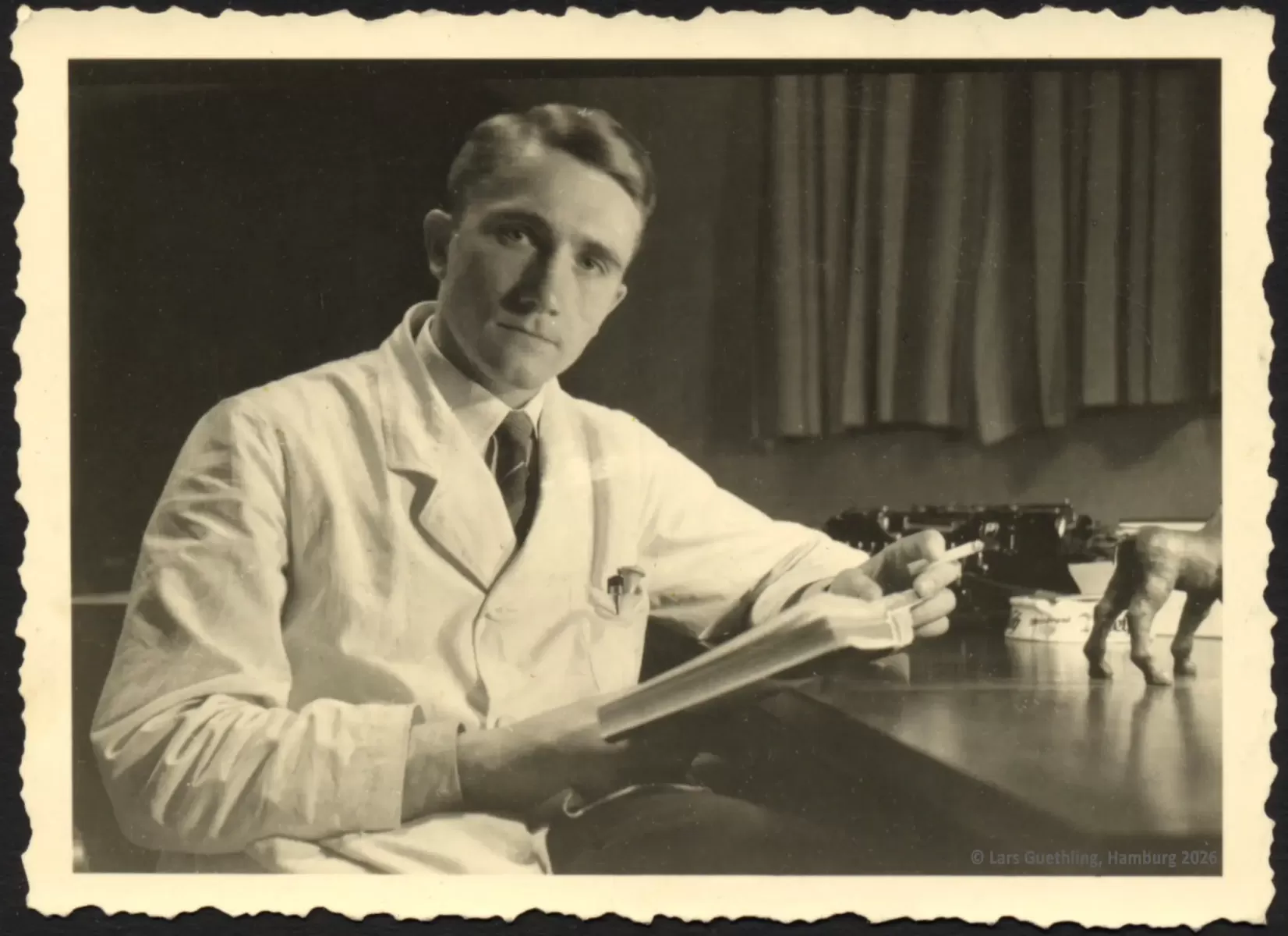
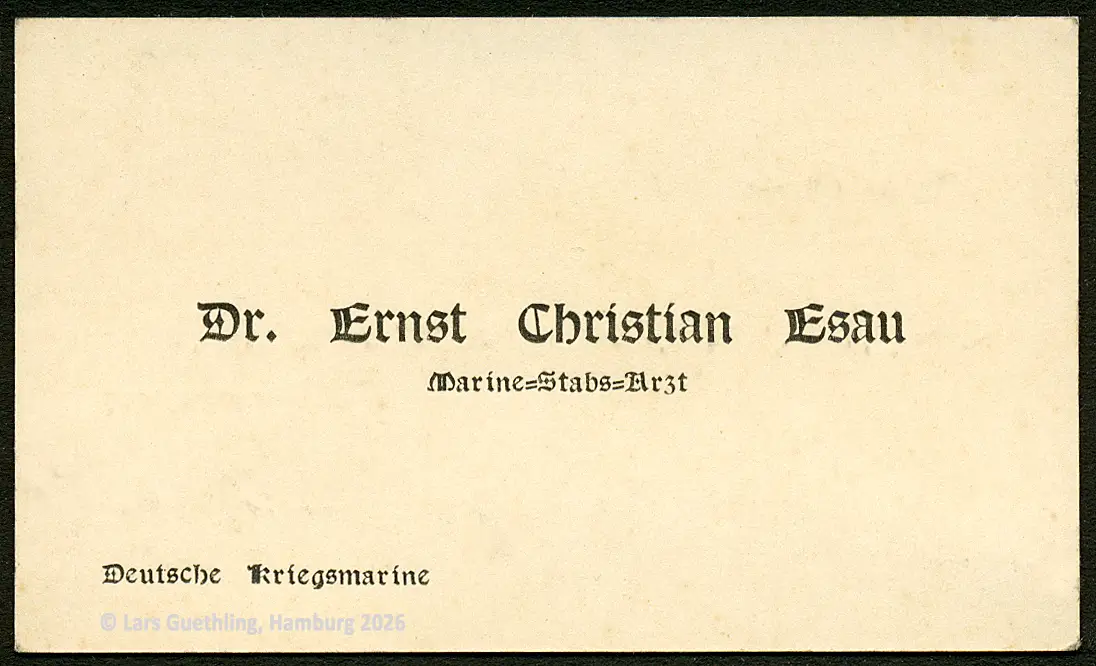
Christian Viktor August Ernst Esau
Known as Ernst Christian, and affectionately called “Bus(ig)” by his sisters.
Born: December 28, 1913, Oschersleben an der Bode, Germany.
Lost: February 11, 1945, aboard U-869 off New Jersey, United States.
This account is presented in Lars Güthling’s own words, with editorial section headings for readability. This account is presented in Lars Güthling’s own words, with editorial section headings for readability. The complete photographic collection, including additional descriptions of the images, appears below the biography.
Family origins
Family Origins in Oschersleben
After the First World War, the family of my great-uncle Ernst Christian Esau lived at Halberstädter Straße 71 in Oschersleben an der Bode. This small town is located not far from Magdeburg in Saxony Anhalt–at that time, the Magdeburg administrative region within the Prussian Province of Saxony. Ernst Christian was born there on December 28, 1913, and received his Christian baptism on March 15, 1914. He had three sisters. The children’s parents were Dr. med. Paul Esau (born 1878)–a surgeon and the chief physician at the Oschersleben district hospital–and his wife, Gertrud, née Röver (born 1886).
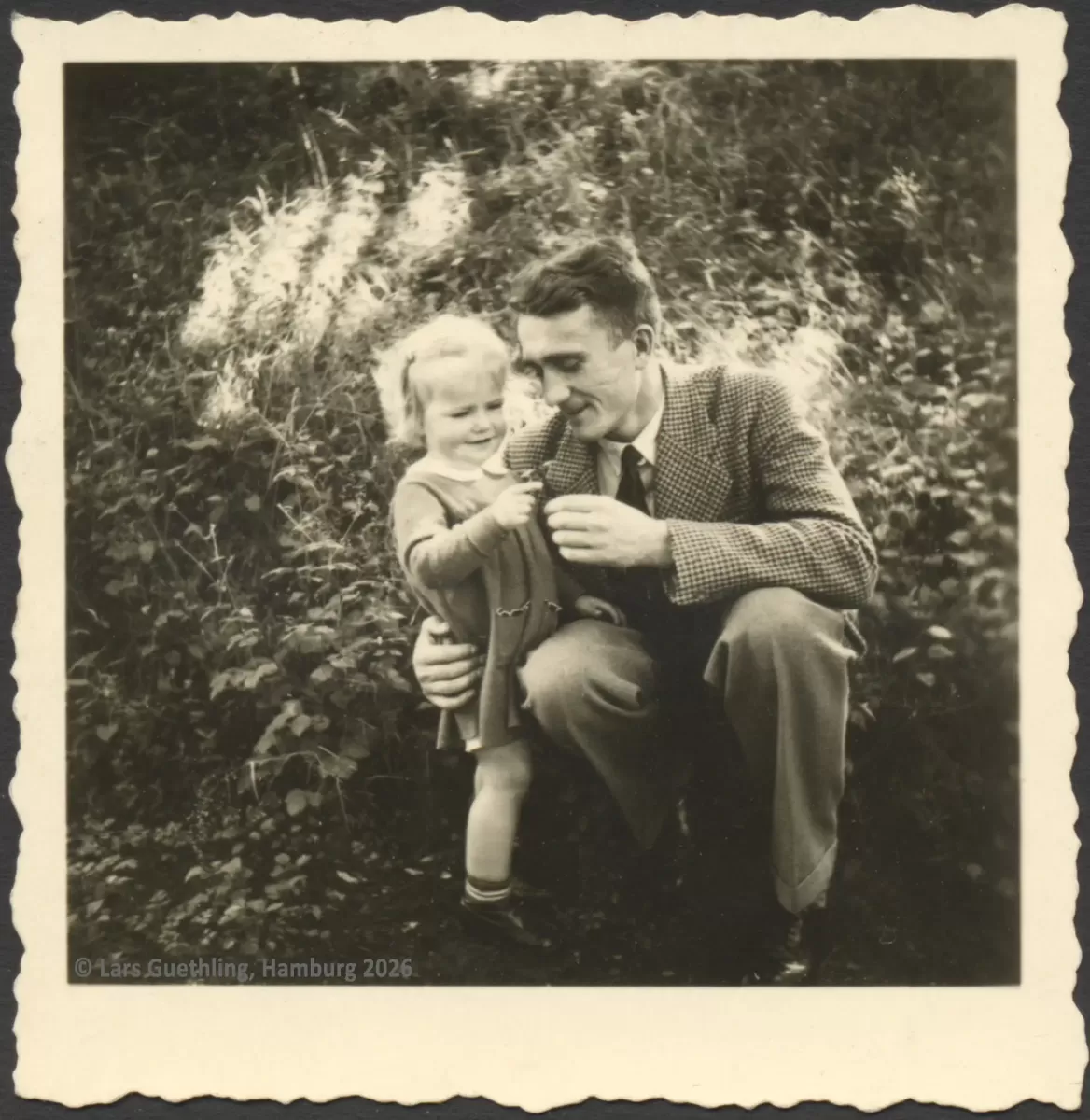
My father Reinhardt’s sister Ortrud, both still alive, recalls Ernst Christian’s heart for children and pets. At the same time, Ortrud has not forgotten that Ernst Christian’s parents, Paul and Gertrud, favoured him over his three sisters even when he was still a child; Renate, Hanna, and Katharine were, after all, “only” girls–a distinction that proved difficult for them to bear. According to Ortrud, some of the sisters occasionally harboured ill will toward their brother; yet, at the very latest following his final U-boat voyage in 1944/45, they were plagued by feelings of guilt. Nevertheless, Renate, in particular, would affectionately call her brother Ernst Christian by his nickname, “Busig”-or “Bus” for short-a term of endearment meaning “little brother.” Ernst Christian used this alias to sign his final letters to the family in November 1944.
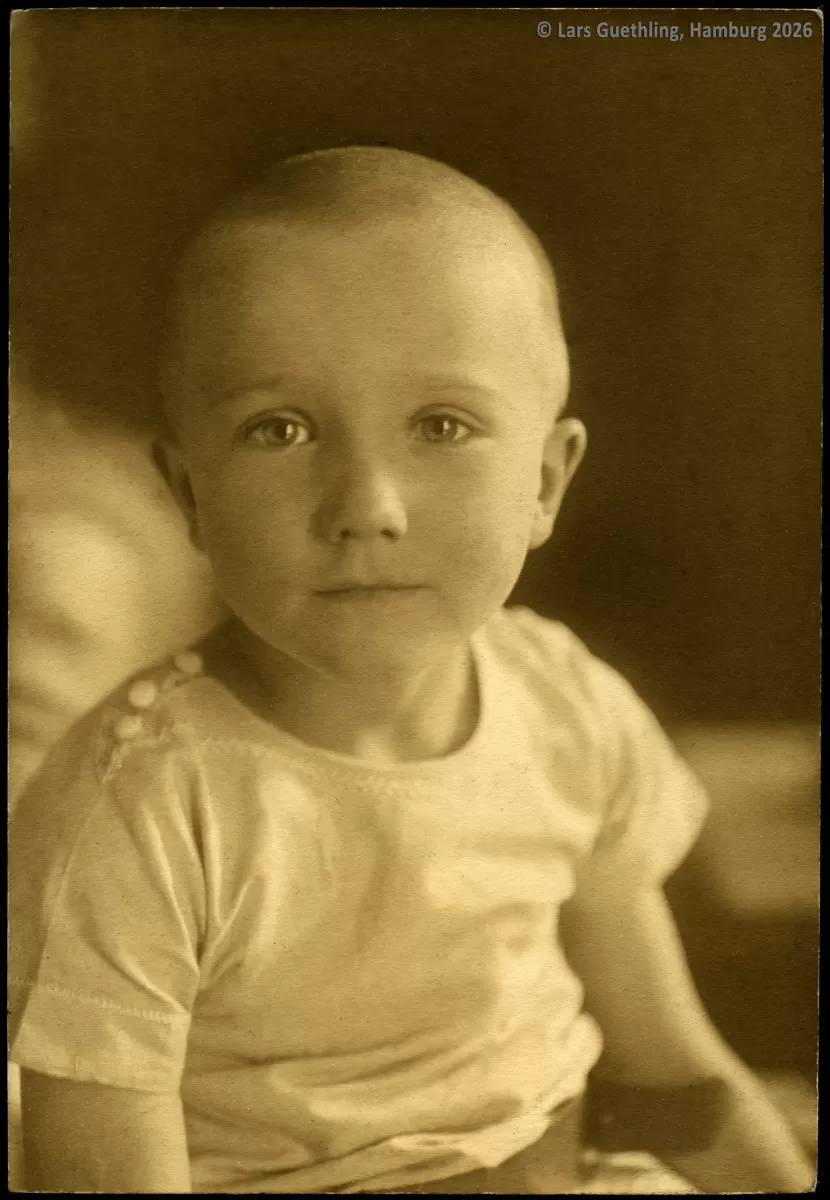
Once he had finished high school, Ernst Christian-the long-awaited male heir of the Esau family-went on to study medicine and earn his doctorate. In doing so, he followed a family tradition spanning more than 300 years: one of his ancestors had served as personal and field physician to Karl XII of Sweden during the King’s extensive military campaigns. Three of Ernst Christian’s great-great-grandfather’s brothers served as field physicians during the the Napoleonic Wars and the Wars of Liberation (1800–1815) all three of whom perished while in service. Ernst Christian’s paternal grandfather, Dr. med. Viktor Esau (1850-1919), as well as his own father, Dr. med. Paul Esau (1878-1944), were physicians, too.
On February 23rd, 1934, the Oscherslebener Kreisblatt, a local newspaper, wrote of Paul: “He is deeply rooted in the finest, most authentic national heritage and opposes any worldview that is foreign to the German spirit or internationalist in nature. He has inherited much from the character of his forebears-a stern discipline toward himself and an unwavering commitment to the common good. […] A great number of his family members sought to give their utmost for the fatherland during the [First World] War: serving as naval aviators, U-boat officers, frontline soldiers in the East and West, and physicians, they all performed their duties to the best of their abilities.” So Ernst Christian’s father Paul opposed “any worldview” that was “foreign to the German spirit or internationalist in nature”? This is especially interesting as his depiction dates back to 1934, just 13 months after Hitler had even become German Chancellor.
Paul’s sister Anna (born 1883) married the renowned naturalist and surgeon Geheimrat Prof. Dr. August Bier-who in 1937 was awarded the National Prize for Art and Science by Hitler. Bier was the inventor of spinal anaesthesia (lumbar anaesthesia), which he first tested on himself following experiments on animals. Furthermore, it was at the suggestion of August Bier that the steel helmet (Stahlhelm) got introduced into the German armed forces at the beginning of the First World War.
Education and society
Student Years and the Political Climate
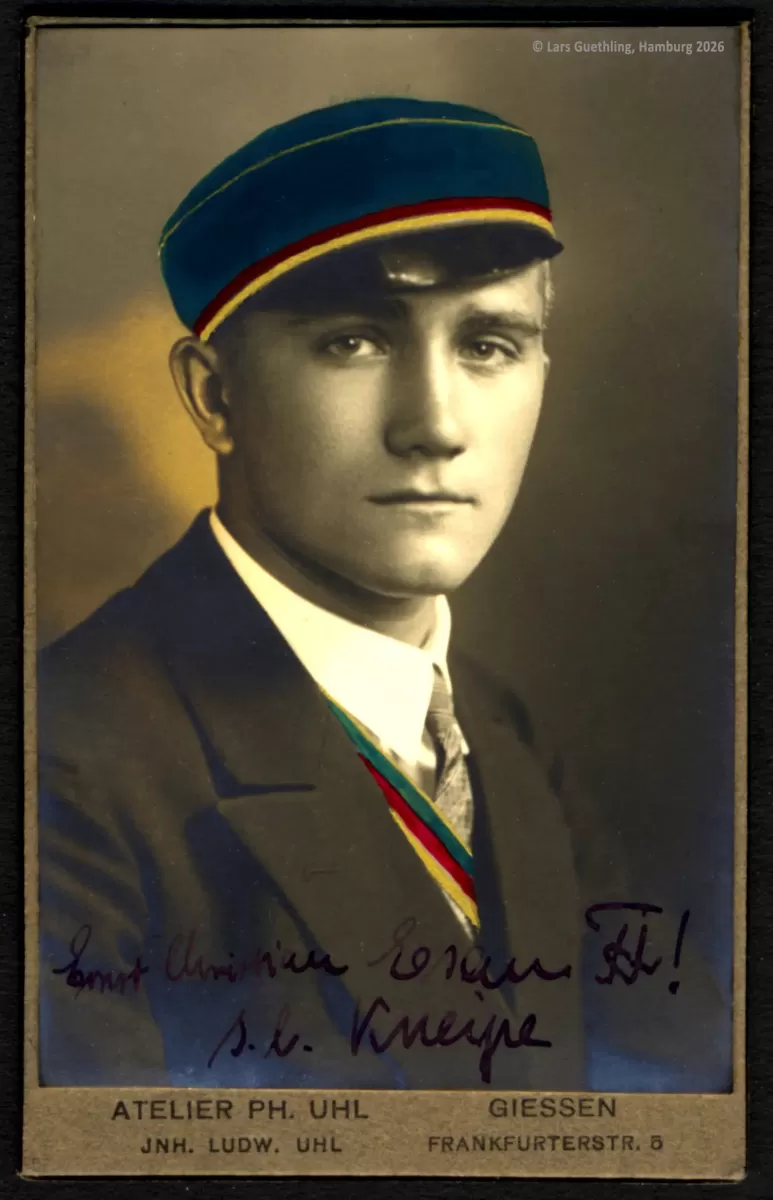
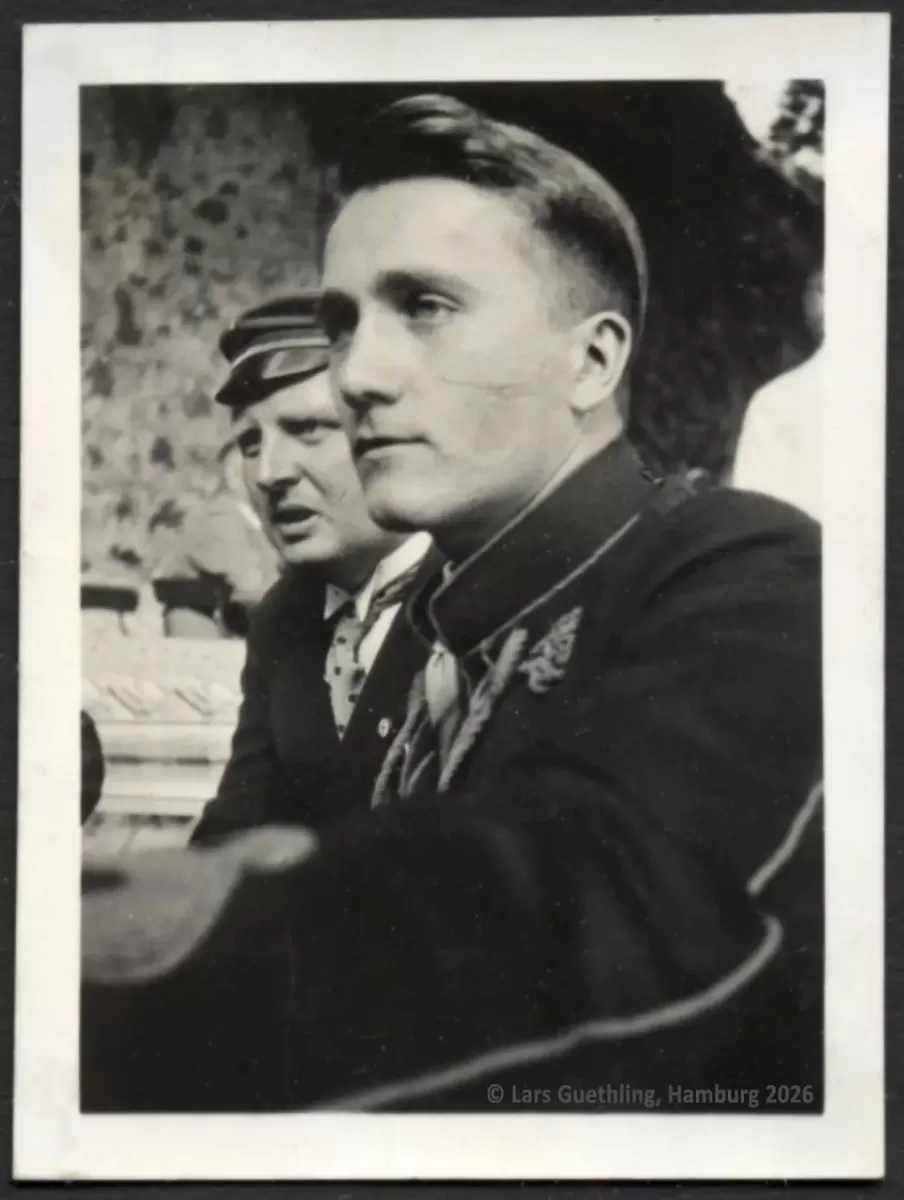
In the early 1930s, Ernst Christian Esau was a member of the Corps Bremensia, a “dueling” student fraternity founded in Göttingen in 1812. From this period, the winter semester of 1932/33, there is a studio portrait of Ernst Christian-hand-coloured at the time-in which he wears a small student cap (“Käppi”) and a multicoloured sash (“Sektband”); the photograph was taken at the studio of Philipp Uhl in Giessen. In a black-and-white image of Ernst Christian dressed in his full student regalia (“Wichs”), several dueling scars (“Schmisse”) are visible on his left cheek and chin. These were intentional, sustained during academic fencing bouts-contests for which the students used a type of rapier known as a “Korbschläger,” featuring a basket-shaped hand guard. For both Ernst Christian and my paternal grandfather, Dr. phil. Johannes Güthling, these martial scars on their faces likely symbolised courage, vigour, and masculine toughness. As for the latter, there can be no two opinions in my grandfather’s case. It is recorded that he once stated the happiest years of his life were those he spent in military service during the war. Dr. Güthling beat and humiliated his children.
According to online sources, Corps Bremensia already had to part with its traditional practice of accepting Jewish members by 1920. After the First World War, German Nationalism clearly was on the rise. By 1933, men of Jewish descent were consequently expelled from the Bremensia and most other Corps in this country. Being a baptised Christian, this did not go for Ernst Christian Esau: While his family name evokes roots in the Old Testament, Paul Esau’s whole family was “proud” of their comprehensive proof of “Aryan” ancestry. Otherwise, the whole family certainly would not have had much of a chance to survived the NS years. Besides-and absurdly so-, Jews weren’t allowed to be drafted by the German Military. By 1971, the Corps Bremensia finally abolished all duels-or “Mensuren”-that had previously led to facial scars.
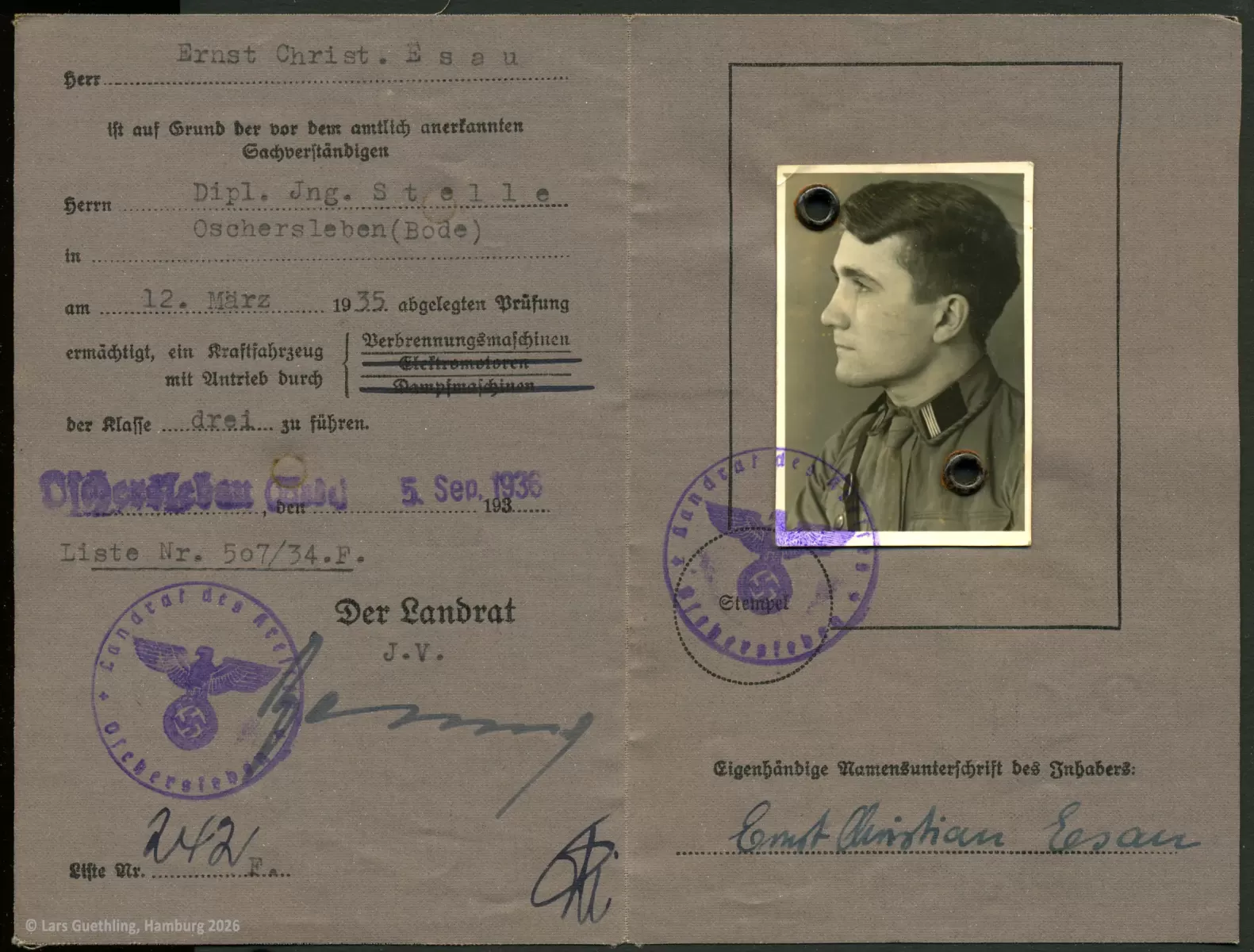
In 1993, Ernst Christian’s favourite sister-my aunt, Renate Esau-gave me a collection of photographs, as well as his 1935 driver’s license, the Esau’s extensive family tree, and his “Kommersbuch” (a songbook bound in thick leather with metal embellishments), which dated back to the time her brother was an active member of the Bremensia student fraternity.
Family history
Family Life and the War Years
Ernst-Christian’s sisters Hanna and Katharine got married in the mid-1930s. Both soon had several children. I myself am a grandson of Katharine. Only Renate’s planned marriage to her fiancé, the dentist Dr. Boy Struck, fell through; she remained single for the rest of her life-and my close, warm relationship with her only developed during some ten final years, when I contacted her to see all of her family photos and to hear about the lives of all those who had already passed by then. Of the five children born to the midwife Katharine Güthling (née Esau), three survived the Second World War; she lost her first daughter Gudrid to a miscarriage on November 26, 1938. My father Reinhardt was her fifth and last child, born in October of 1945.
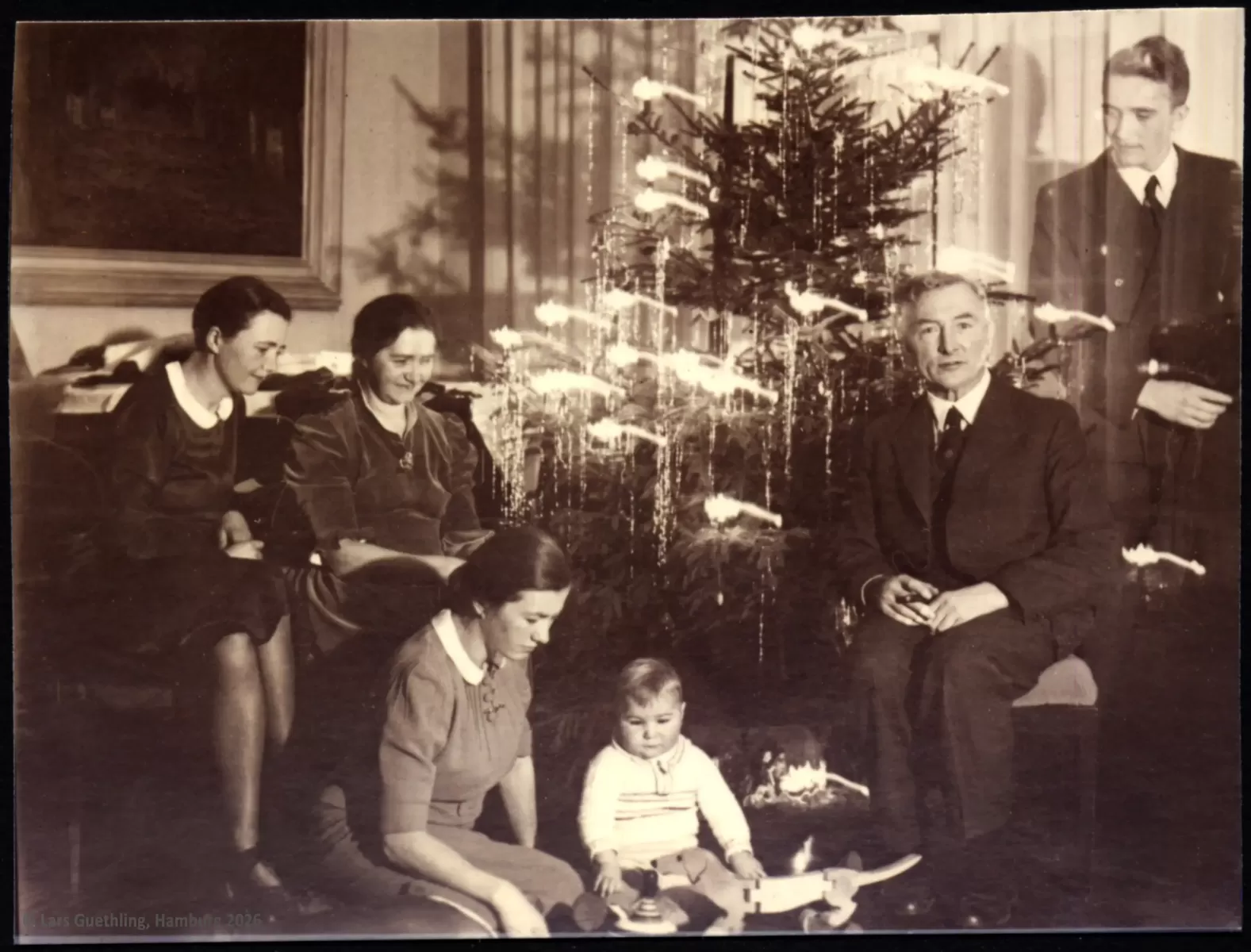
The little boy with a toy dachshund seen in the 1938 Christmas photograph-their first son, Dietrich (August 11, 1937 – July 17, 1942)-exhibited such behavioural issues that, on May 28, 1942, when he was nearly five years old, the Esau and Güthling families placed him in the “special ward for children” (Kinderfachabteilung)-Department IV-at the Sachsenberg-Lewenberg asylum in Schwerin, which was directed by Dr. Alfred Leu. As became known around 1945, this facility carried out the euthanasia of children on dozens of occasions-a practice explicitly requested by Adolf Hitler’s Nazi regime. Seven weeks after being separated from his mother, little Dietrich died there. As far as I can see, this must be the darkest chapter in all of our family’s history of the past 100 years. According to the hospital, the boy’s cause of death was “diphtheria.”
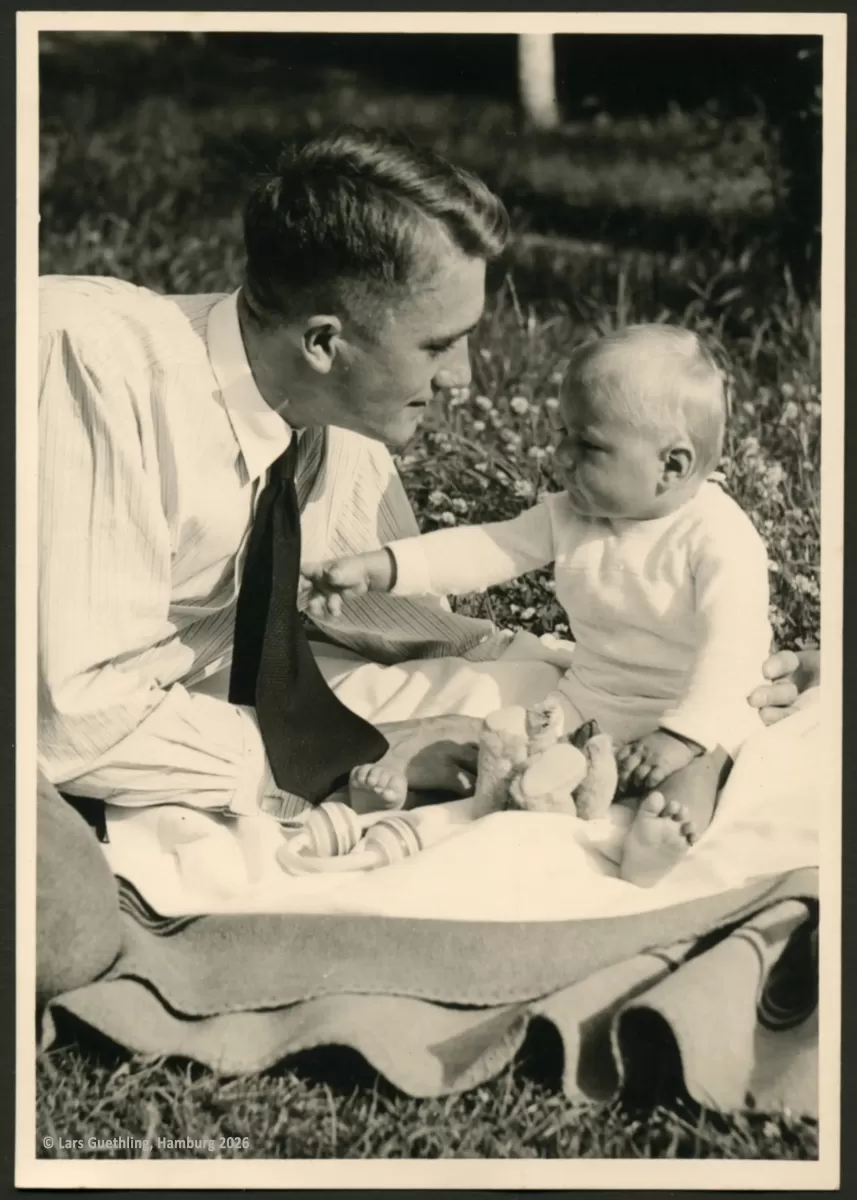
In cases where patients were killed-for instance, by lethal injection-much like in the murders of concentration camp inmates, relatives were typically provided with an arbitrary reason as the “official” cause of death. At the time of his first son’s passing, my grandfather Dr. Johannes Güthling-the boy’s father, who was a member of the SS’s SD and would later become an SS “Sturmbannführer”-was still serving with the German Wehrmacht on the Russian front. It is known that at least one individual, Dr. Paul Esau, Dietrich’s maternal grandfather and father of Ernst Christian, was a proponent of euthanasia. The same can certainly be assumed of Sturmbannführer Dr. Güthling, whose astounding and well-researched bio is available on wikipedia.
Naval service
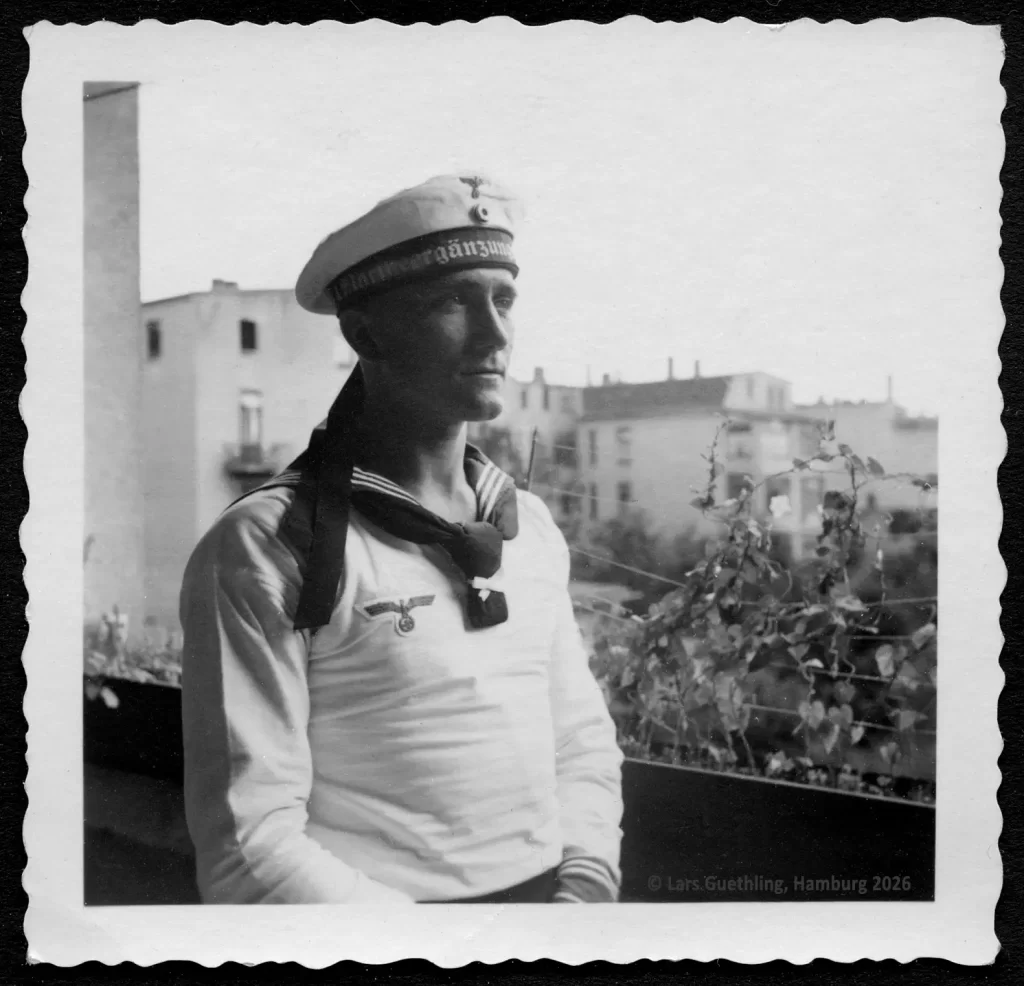
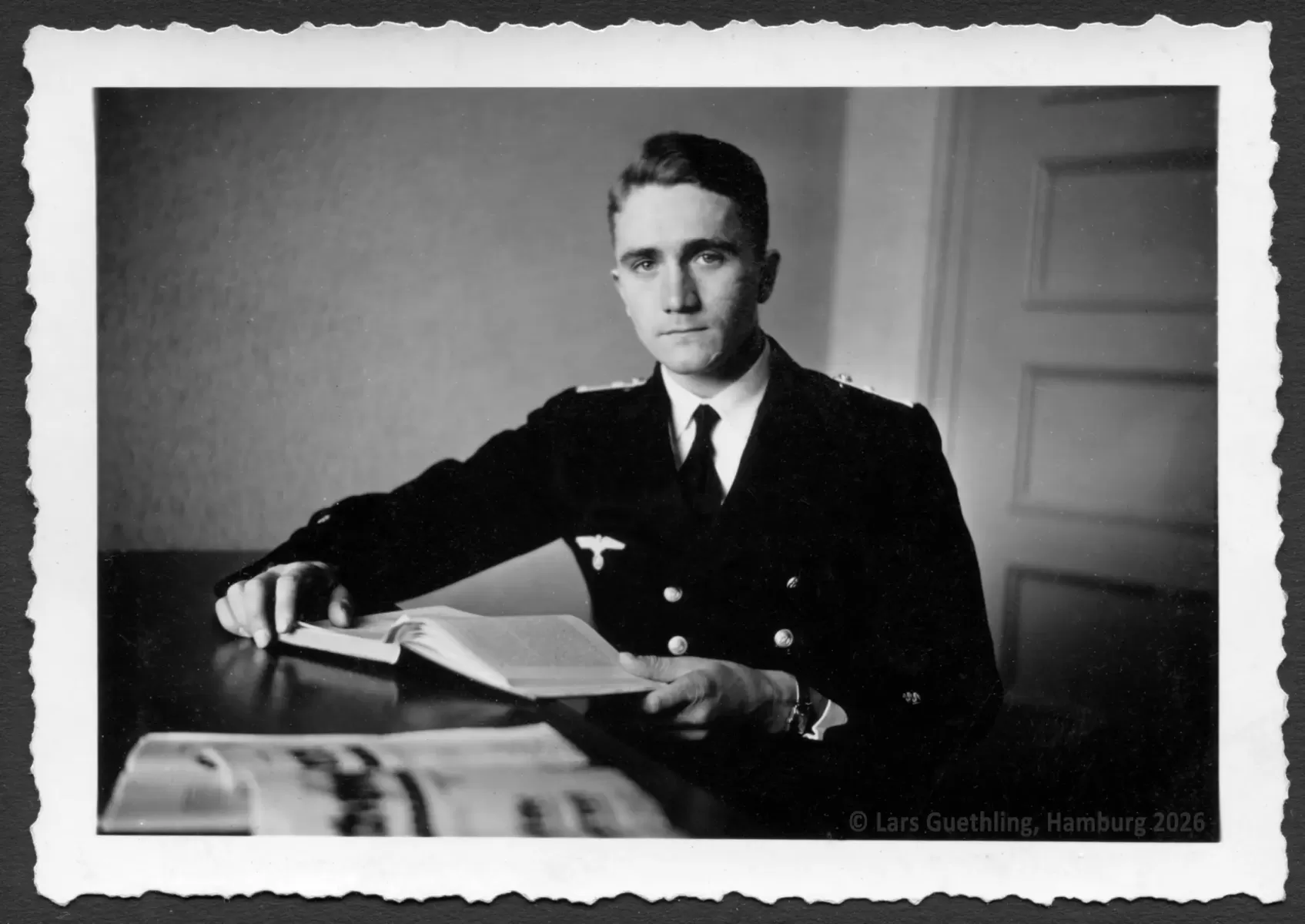
Service in the Kriegsmarine
During the First World War, Paul Esau had served for some time as a naval surgeon. Following his father’s example, Ernst Christian now strived to be a naval physician during the Second World War. The Type IX C/40 submarine U-188 was launched on March 31 and commissioned on August 5, 1942; it was assigned to the 10th U-boat Flotilla. During its first combat patrol, which began in Kiel on March 4, 1943, U-188 operated in the North Atlantic before being forced to return to port early, arriving in Lorient, France, on May 4, 1943, following an air attack two days earlier. During this mission, the submarine, commanded by Lieutenant Commander Siegfried Lüdden (born 1916), sank the British destroyer HMS BEVERLEY on April 11, 1943. Ernst Christian Esau was not aboard U-188 during this first combat patrol.
U-188 / 1943–1944
The Voyage of U-188 to Penang and Back
The first major submarine voyage in which Ernst Christian participated as the ship’s doctor aboard Siegfried Lüdden’s U-188 began just about eight weeks after the submarine’s return in May: on June 30, 1943, the submarine “set sail” from Lorient, bound for Penang, an island located in the Strait of Malacca.
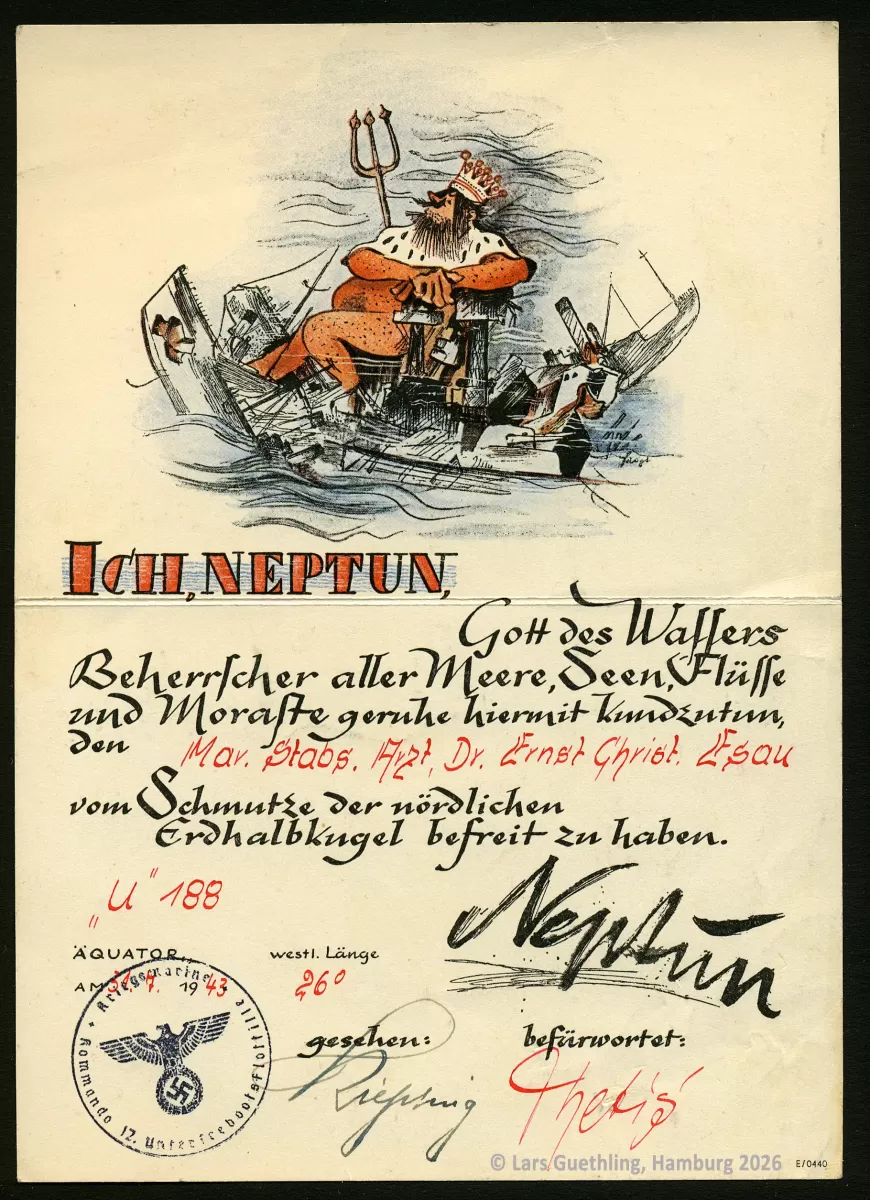
As part of the U-boat group MONSUN, U-188 passed the island of Tenerife in the central Atlantic, the South Atlantic, the island of Mauritius in the Indian Ocean, the Gulf of Oman, and Malaya during this voyage. To mark their first-ever crossing of the equator on July 31, 1943, the men on board received certificates commemorating their “equator baptism”-a traditional seafaring ritual that typically involves consuming unpalatable concoctions and enduring other “amusing” forms of hazing. U-188 crossed the equator at 26 degrees west longitude. On September 8, the submarine received fuel and provisions from the German supply ship BRAKE.
On September 21, east of Mogadishu, U-188 sank the 134-meter-long American steam freighter CORNELIA P. SPENCER (7,176 GRT), an incident in which two men from the 68-member crew lost their lives. Subsequently, on October 5, 1943, northwest of Muscat in the Gulf of Oman, Lüddens’ boat damaged the 160-meter-long Norwegian motor tanker BRITANNIA (9,977 GRT). Despite a torpedo strike in the engine room, all 46 crew members survived the attack, as the BRITANNIA did not sink but instead managed to reach the Iranian port of Bandar Abbas. The crew on board U-188 was not happy with this outcome.
Penang, the destination of U-188, was reached on October 30, 1943. Following an overhaul lasting several weeks in the docks of Shonanto (known today once again as Singapore), U-188 returned to Penang on December 31, 1943. From there, the submarine went on its way back to Bordeaux on January 9, 1944. During this voyage, in January and February 1944, U-188 sank seven ships: FORT BUCKINGHAM (38 dead, 35 survivors); FORT LA MAUNE (no deaths, 56 survivors); SAMOURI (no deaths, 49 survivors); SURADA (no deaths, 103 survivors); OLGA E. EMBIRICOS (20 dead, including the captain, 21 survivors); CHUNG CHENG (20 dead, 51 survivors); and VIVA (no deaths, 37 survivors). On February 11, 1944, Captain Lüdden was awarded the Knight’s Cross of the Iron Cross for these actions, in absentia. Dr. Ernst Christian Esau held the Iron Cross, First Class, although the circumstances surrounding his award remain unclear.
Following this, on March 17, U-188 once again received supplies from the German replenishment ship BRAKE. The entire return voyage lasted 152 days, with the crew finally reaching Bordeaux again on June 19, 1944. Four crew members had lost their lives during U-188’s combat patrols. Between June and August 1944, a snorkel system was to be installed on board, which would have allowed the diesel engines to operate while the submarine was submerged. However, due to a lack of batteries, U-188 had to be taken out of service on August 20, 1944. To prevent it from falling into the hands of the Allies, the vessel was destroyed by a demolition team on August 25 inside the 12th U-boat Flotilla’s submarine bunker in Bordeaux, France. Captain Lüdden, who had reached the rank of a corvette captain by then, died on January 13, 1945, at the age of 28, during a fire aboard the DARESSALAM (formerly the African steamer SAVAS, which had latterly served as an accommodation ship for the Kriegsmarine) in Kiel. The detonated wreck of Lüdden’s boat U-188 was finally scrapped in 1947.
Klaus Willmann describes the details of the voyage to Penang and back in his book Das Boot U 188 – Zeitzeugen-Bericht aus dem Zweiten Weltkrieg (“U-boat U 188: An Eyewitness Account from the Second World War”), published in 2009. This book is based on the war diary of U-188, as well as accounts from crew members Anton Staller and Gottlieb Baumann, an electrical petty officer. Ernst Christian Esau, serving as the ship’s doctor, is mentioned by name several times-though in a rather unfavourable light. Initially, the submarine’s crew was puzzled by the presence of a doctor on board who had no other maritime duties; such an arrangement was apparently reserved only for exceptionally long voyages that posed significant health challenges. In terms of both hierarchy and intellect, Ernst Christian seems to have been much closer to the other officers than to the enlisted crew members, a point that Willmann highlights clearly. Furthermore, the ship’s doctor spent a considerable amount of time on deck-a privilege otherwise granted to only a few sailors at any one time. His conduct left some of the common submariners feeling slighted during this 122-day, 19,331-nautical-mile voyage (the return journey covered 20,761 nautical miles over 152 days).
July 1944
Marriage to Eva Olsen
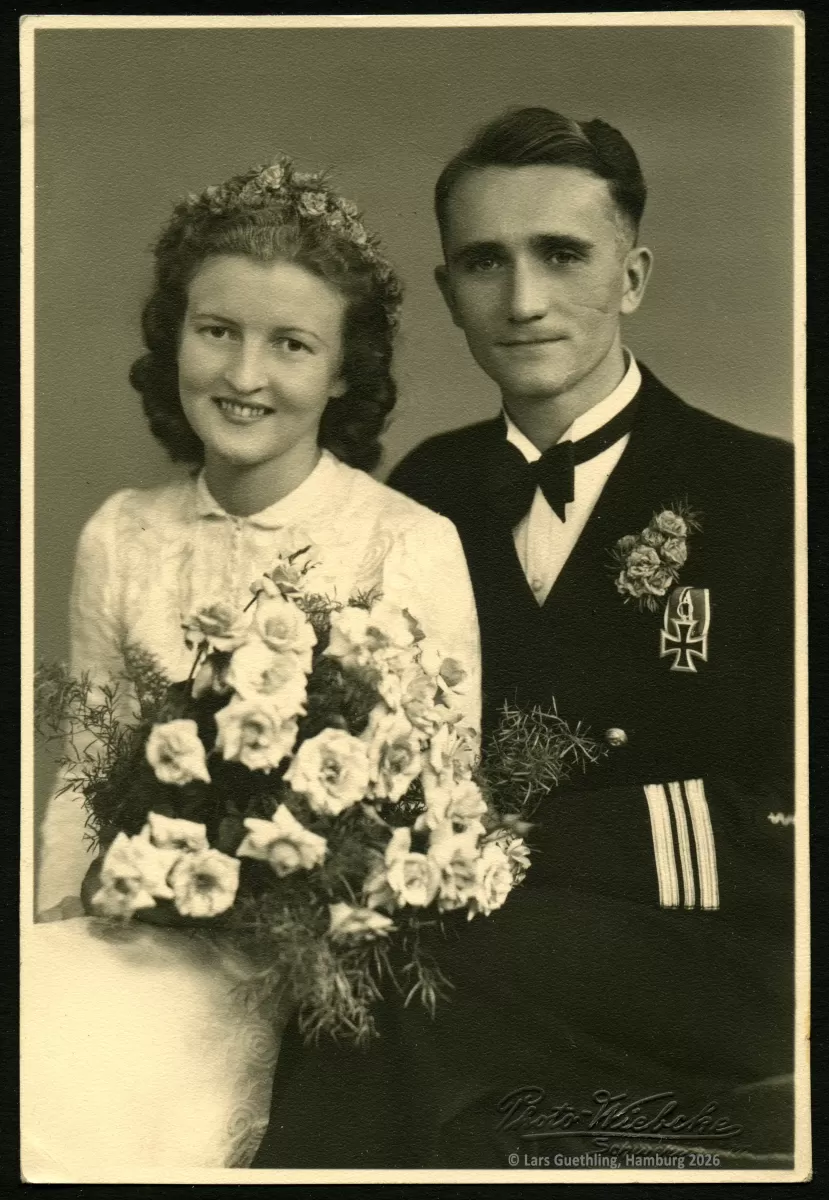
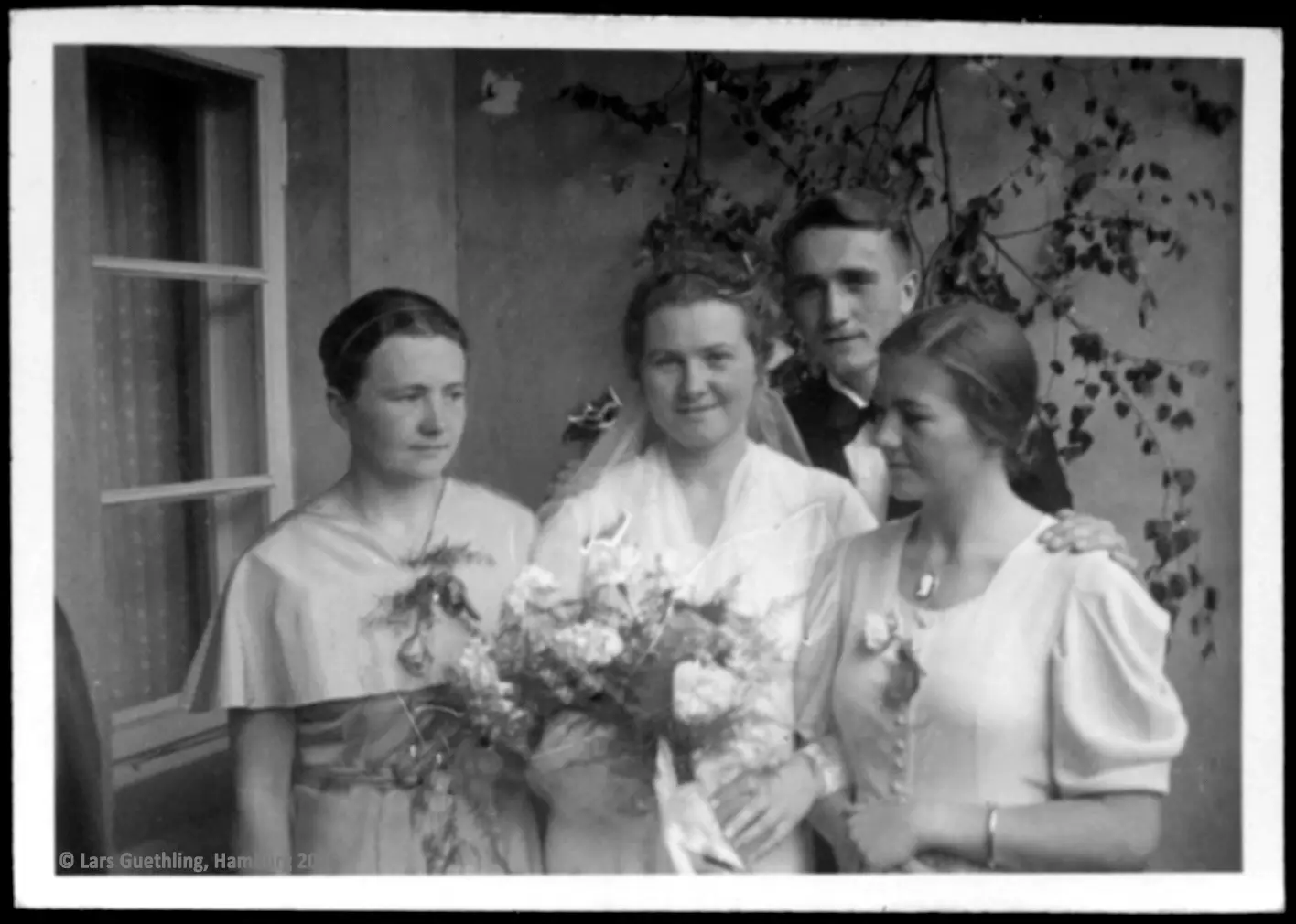
Six weeks after his return from Penang, on July 29, 1944, Ernst Christian married his Norwegian love by the name of Eva Olsen. Another six weeks later, on September 18, his father, Paul-only sixty-six years old-died during or shortly after a fall down a flight of stairs. Less than four months after his wedding, and just two months after his father’s passing, Ernst Christian boarded a U-boat in Kiel-the U-869-to serve as the ship’s doctor. On November 20, 1944, he saw his family and his home in Oschersleben for the last time. As the boat took to the sea, Ernst Christian must have been aware that three out of every four German submariners in the Second World War lost their lives in the line of duty. No other branch of the German armed forces suffered such high casualty rates. Would he, as a doctor, be one of the fortunate exceptions?
Final assignment
His Final Assignment: U-869
The new vessel was a long-range submarine of the Type IX C/40 class, designated U-869; its keel was laid by the Deschimag shipyard in Bremen on April 5, 1943. It was launched on October 5, 1943, and commissioned on January 26, 1944. At a speed of 10 knots, U-869 had a range of up to 13,850 nautical miles and was part of the 33rd U-boat Flotilla-established in Flensburg in September 1944-which maintained bases in Penang, Batavia (Jakarta), Shonanto (Singapore), and Soerabaja (Surabaya).
On January 26, 1944, the Kriegsmarine appointed Hellmut Neuerburg-born in 1917 and a recipient of the 4th Class Service Award in 1940-as Lieutenant Commander of the boat. Between June and September 1944, the u-boat was fitted with a snorkel system in Stettin, and from November 8 to 22, final work and outfitting were completed in Kiel. The following day, the boat departed Kiel for Horten, Norway (on the western shore of the Oslofjord), to conduct snorkel training; on December 3, it was relocated from Horten to Kristiansand-hundreds of Kilometers further south-arriving there on December 4.
The first “war patrol” of U-869 began four days later, on December 8, 1944. Its designated operational area was the North Atlantic, extending to the U.S. coast off New York and New Jersey, where the submarine was to patrol near the harbour entrances. An order transmitted by radio from the BdU (Commander of German U-boats)-instructing the crew to head for the Strait of Gibraltar instead of the U.S. East Coast due to a critical fuel shortage-was never acknowledged by the crew and, in all likelihood, never even reached U-869. Americans, who had long since cracked the German radio codes, lost track of the submarine’s position as well. Until the early 1990s, they operated under the assumption that it had been sunk on February 28, 1945, off the coast of Rabat, North Africa.
November 1944
The Final Letters
The following letters are reproduced from the family account.
While still in Kiel, Ernst Christian Esau wrote at least four final, handwritten letters to his family on board this submarine: one for his family, intended for them to receive at Christmas 1944; a second and a third for his favourite sister, Renate-whom he affectionately called “Bämschen” or “Rehlein” (“little deer”)-and a fourth for his wife, Eva, whom he had married just recently, on July 29. Ernst Christian penned one of these letters on November 22, 1944-exactly one day before U-869 departed from the port of Kiel. I have copies of Renate’s two, one of which bears the date of that very day. In the other one, Ernst Christian asked his sister Renate to deliver the fourth letter to his wife, Eva, only in the event that his submarine would go down. After several months had passed without any sign of life at all from U-869, Renate must have fulfilled her brother’s last wish sometime around February 1945. Eva Esau-Olsen later got married a second time.
This is the content of the penultimate letter to Renate, which spans two handwritten pages:
“My dear Renate! I cannot help it; I felt a compelling urge to write something like a final letter-if only to ensure that, ‘come what may,’ everything is left in order. I am sending this letter to you-my best friend-with the request that you give it to Eva, should the boat not return. What more can I say? You know what is in my heart. I also sent a Christmas letter home, in which I managed to summon a cheerful tone-but the underlying reality keeps breaking through. My heart has never felt as heavy as it does now, and I can hardly fathom how a person can still function or attend to other matters under such a burden. I am deeply worried about all of you, even though I know how brave you are. We have truly reached a point where we can only pray to God for help. May He protect you from the worst-from bombs and death-and keep Mother safe from illness and infirmity. How suddenly everything has become so difficult; this is what it looks like when a nation fights for its very survival. – My dear little deer, keep me in your thoughts, just as my own thoughts will always be with you-and may we never lose the hope that we shall see each other again! It will be a hard time ahead. Your Bus.”
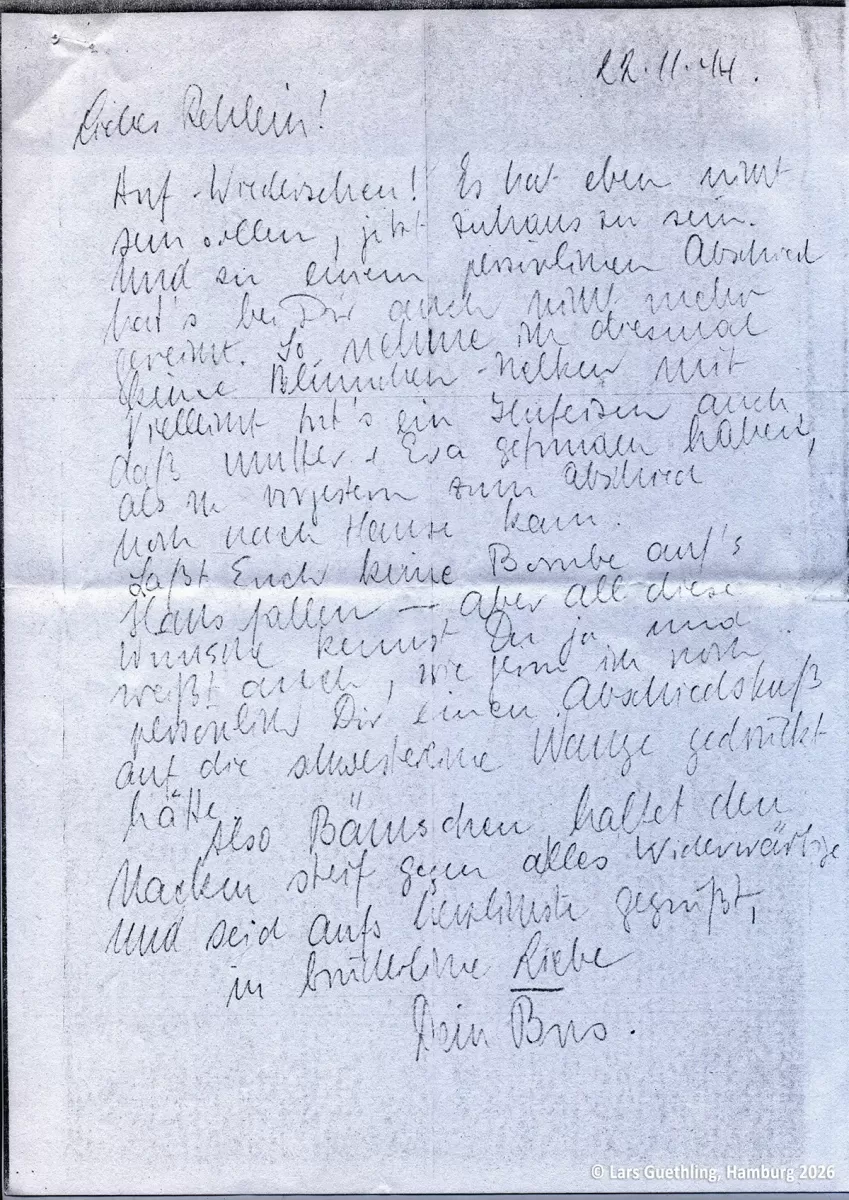
Shortly thereafter, on November 22, 1944-literally just hours before U-869 went on its long journey over to Norway and onwards across the Atlantic for the first and final time-Ernst Christian wrote once more to his sister, Renate. This letter’s envelop, containing a single A4 page, would have borne the military field post number “M – 49 163” as its return address.
“Dearest little deer! Goodbye! It just wasn’t meant to be-me being at home right now. And there wasn’t enough time for a proper, in-person farewell, either. So, this time, I’m not bringing any little flowers-carnations-along. Perhaps a horseshoe will do instead-one that Mother and Eva found when I stopped by home the day before yesterday to say goodbye. Don’t let any bombs fall on the house-though you know all these wishes by heart, and you also know how much I would have loved to give you a parting kiss on your sisterly cheek in person. So, ‘Bämschen,’ keep your chin up against all the unpleasantness, and please accept my warmest regards, with brotherly love-your Bus.”
February 1945
Loss, Remembrance, and Unanswered Questions
A carved memorial marker for Paul, Gertrud, and Ernst Christian Esau records the following for the son-who had gone to sea and never returned-under the heading of place and date of death: “lost at sea, February 28, 1945.” 14 years later, in 1959, my aunt received a report-dated April 15 of that year-from Jürgen Rohwer, managing director of the Working Group for Military Research (“Arbeitskreis für Wehrforschung”) in Frankfurt am Main, regarding the presumed loss of the submarine U-869. Like her mother, Gertrud (who would pass away in 1964), Renate was left to assume-until her own death around the year 2000-that Ernst Christian’s end had unfolded exactly as described by Rohwer. The same holds true for his sisters, Hanna and Katharine, and their descendants-myself included. The letter from the Working Group stated:
“At the end of February 1945, the slow convoy GUS.74 was en route from Oran to the United States. On February 28, it reached a point approximately 100 nautical miles west of Lyautey (French Morocco), where it joined up with a group consisting of six merchant steamers and two French escort vessels arriving from Casablanca. The escort force comprised five American destroyer escorts and two French anti-submarine vessels. On February 28, shortly after 6:00 a.m., the submarine evidently sighted the convoy and attempted an underwater attack. At 6:48 a.m., the submarine was detected via sonar by the American destroyer escort FOWLER at a range of about 2,500 meters. Six minutes later, the destroyer escort launched its first depth-charge attack. Two of the depth charges-equipped with magnetic proximity fuzes-detonated after twelve and twenty seconds, respectively. Shortly thereafter, some debris surfaced. At 7:18 a.m., FOWLER dropped another pattern of depth charges, followed twenty seconds later by two heavy underwater explosions. [Also involved were the KNOXVILLE and ROBINSON, as well as the French anti-submarine vessels L’INDISCRET and LE RESOLUTE.] […] Shortly after 12:00 p.m., the two French anti-submarine vessels carried out another depth-charge attack, which definitively destroyed the submarine. It is highly probable that the submarine sustained severe damage during the initial attack by the destroyer escort FOWLER and was likely lost at that point. The subsequent attacks were presumably directed against the wreck, which was already resting on the seabed. No survivors from the submarine were recovered, nor were there any further pieces of wreckage coming up. The exact location of the sinking was 34-30N/08-13W.”
In reality, however, the end for U-869 came as early as February 11, 1945-and on the opposite side of the Atlantic. Two months and three days after departing from Kristiansand, Norway, U-869 had not yet torpedoed a single enemy vessel. On that day, in grid square CA 5291-at 39° 33′ North, 73° 02′ West-the American destroyers USS HOWARD D. CROWE (DE-252) and USS KOINER (DE-331) located and sank the submarine using “Hedgehog” anti-submarine projectors and depth charges. All 56 men on board perished. Nearly fifty years would pass before the wreck of U-869 was discovered off the coast of New Jersey in 1991; subsequently-after another six years and the deaths of three non-commercial divers-it was positively identified by Richie Kohler and John Chatterton. For this achievement I wish to express my deep thankfulness to both of them and to everybody else involved in the often risky procedure of on-location research.
Remembrance
A Family Member Reflects
To this day, my family cannot fathom it: what was the point of this war? What business did Hitler’s warships have in the Far East or the Americas, thousands of miles beyond German waters? As for me, I performed alternative civilian service in the late 1980s. I have never wanted-and still do not want-anything to do with the military, its so-called “necessities,” or its command structures. No “Right or wrong-my country” for me, please.
How, I wonder, did my great-uncle-a third-generation physician, who was believed to be a man of humanitarian spirit-manage to endure the fact that, in 1943/44, during his combat patrol aboard U-188 bound for Penang and back, at least 80 sailors lost their lives as a direct result of attacks carried out by his boat? Did he view this as the iron-willed fulfilment of duty-did he even rejoice in it? At his wedding to Eva in 1944, he wore an Iron Cross, pinned proudly to his jacket. Why? Was he, too, a deluded Nazi? I wish I could have spoken with him after 1945, but I was only born in 1968 and by that time, Ernst Christian had already paid the highest price for his patriotism and his “valiant” obedience a quarter of a century earlier. He now rests aboard U-869 off the coast of New Jersey-a vessel sunk during its two-month “maiden voyage.”
Among my great-uncle’s belongings was the good-luck charm mentioned in his letter dated November 22, 1944-a horseshoe that his mother, Gertrud, and his wife, Eva, had found together. Yet, good luck clearly parted ways with U-869 and so Ernst Christian’s boat eventually became one of the many steel coffins scattered all over the oceans.
For me, there is at least a small consolation in the fact that no torpedoes seem to have been fired from U-869 in order to damage a ship or to take a human life. I wish that Captain Neuerburg had consciously refrained from undertaking any attacks-especially since he had not even acknowledged, let alone carried out, the BdU’s (U-boat Command’s) order to move to a new operational area off Gibraltar. But more than likely, this hope of mine is a sheer illusion.
Three months after the loss of that boat, the Second World War finally came to an end, at least in Europe. The human losses, the lingering questions, and even a portion of the moral responsibility now rest with the generations that have followed and will continue to do so. May they always face this part of their common history with sincerity and compassion.
Historical Photograph Collection
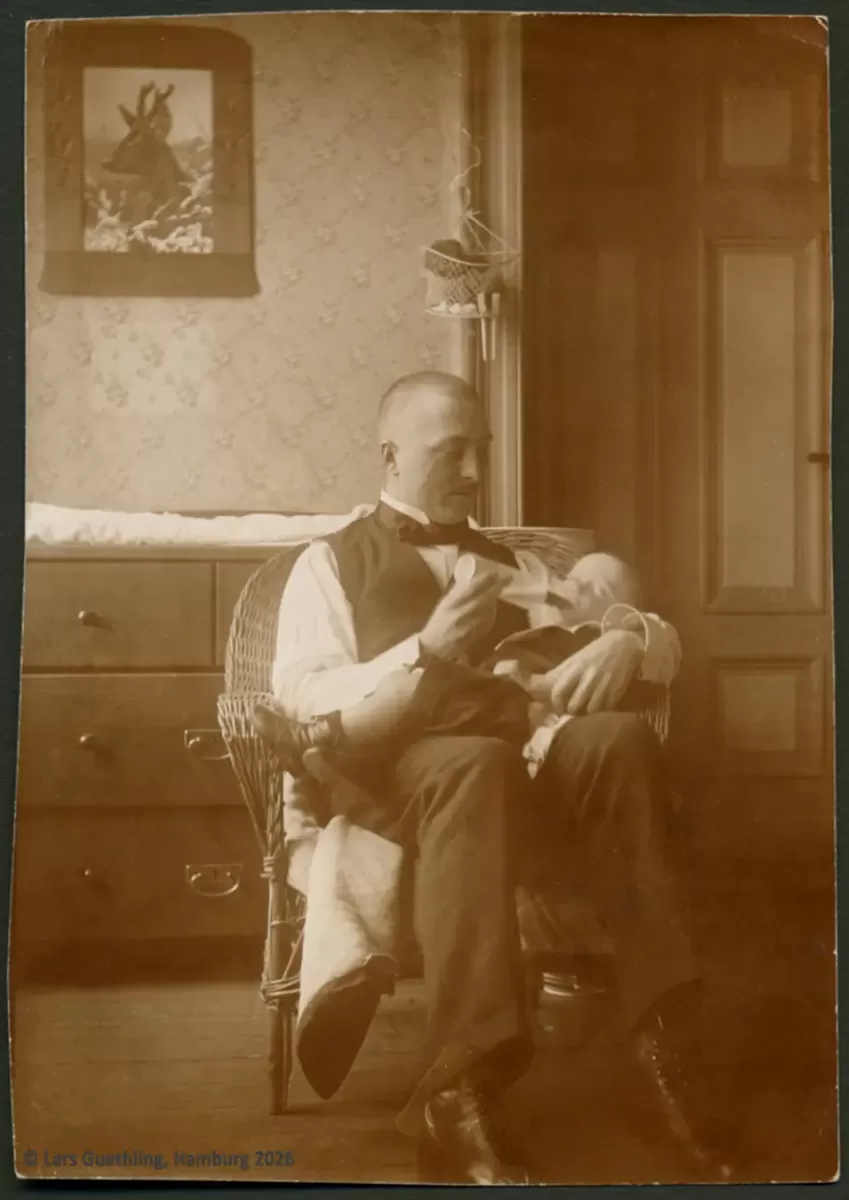
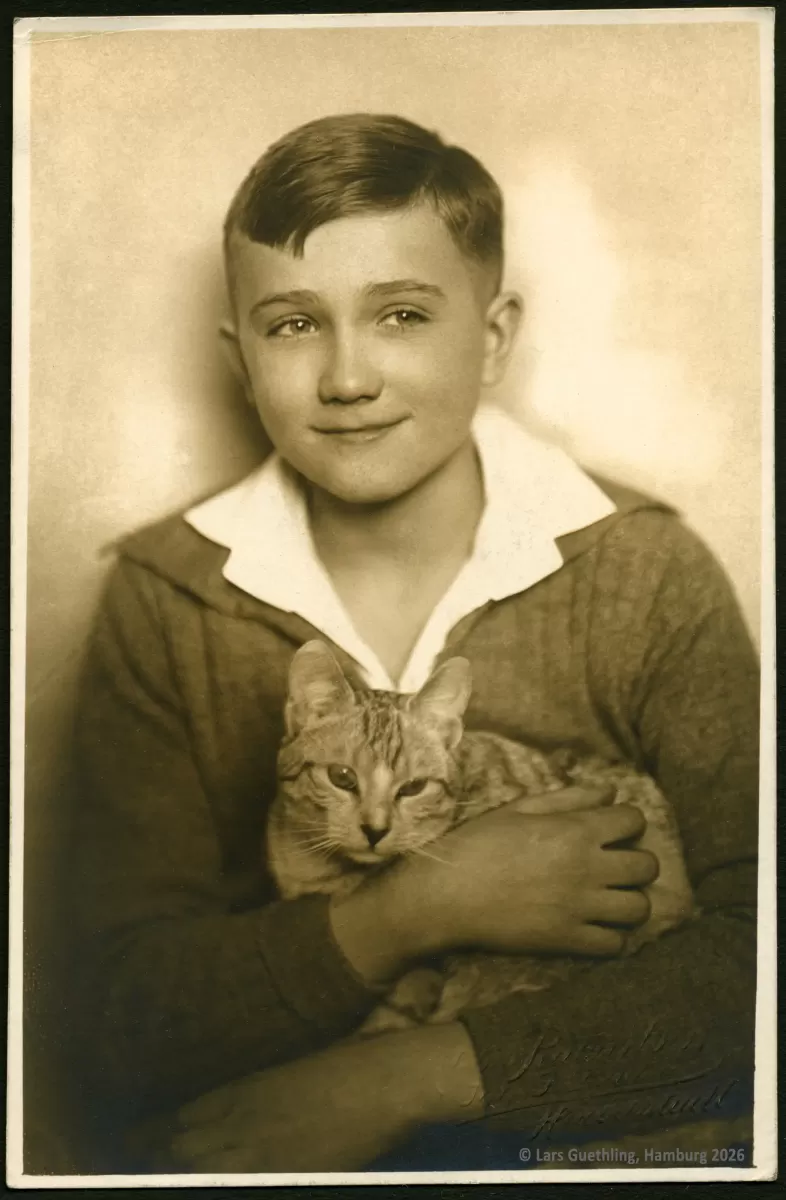
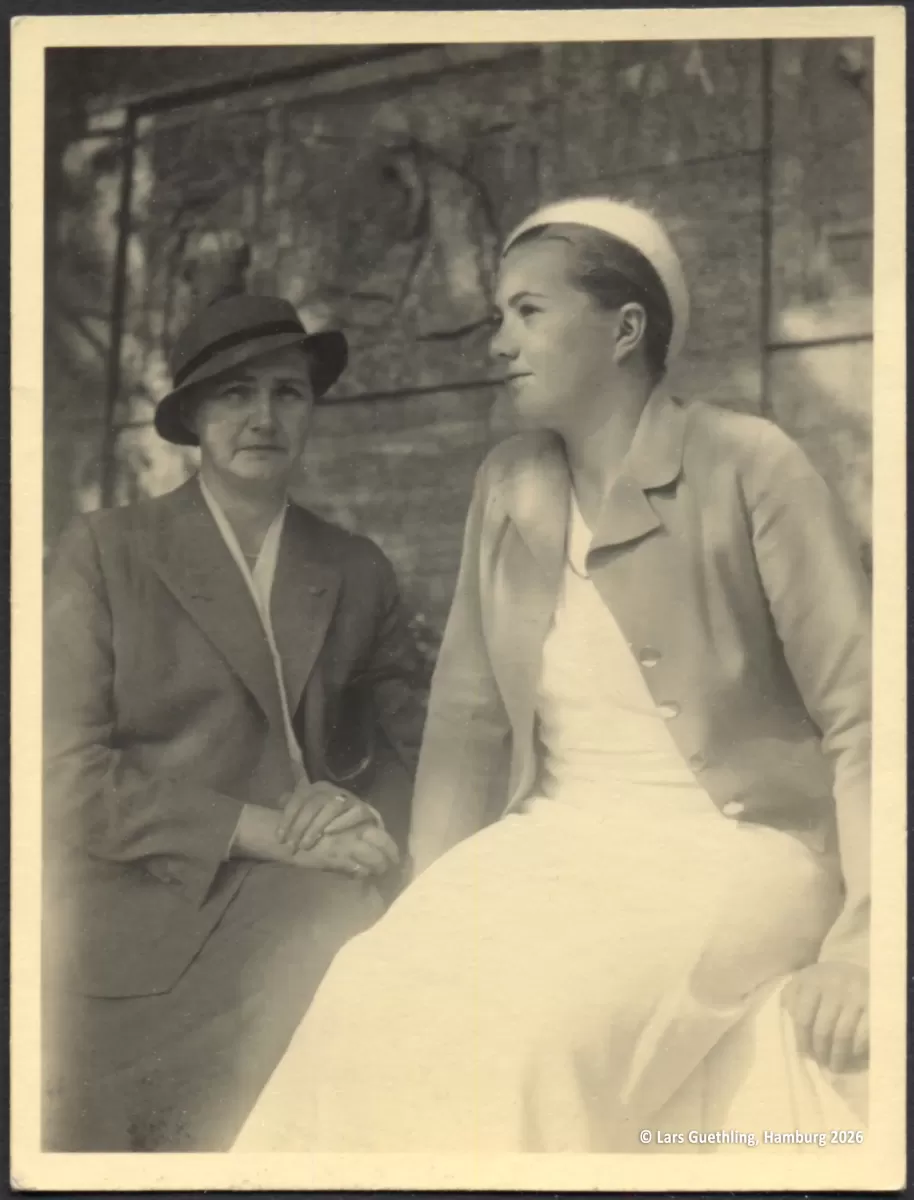
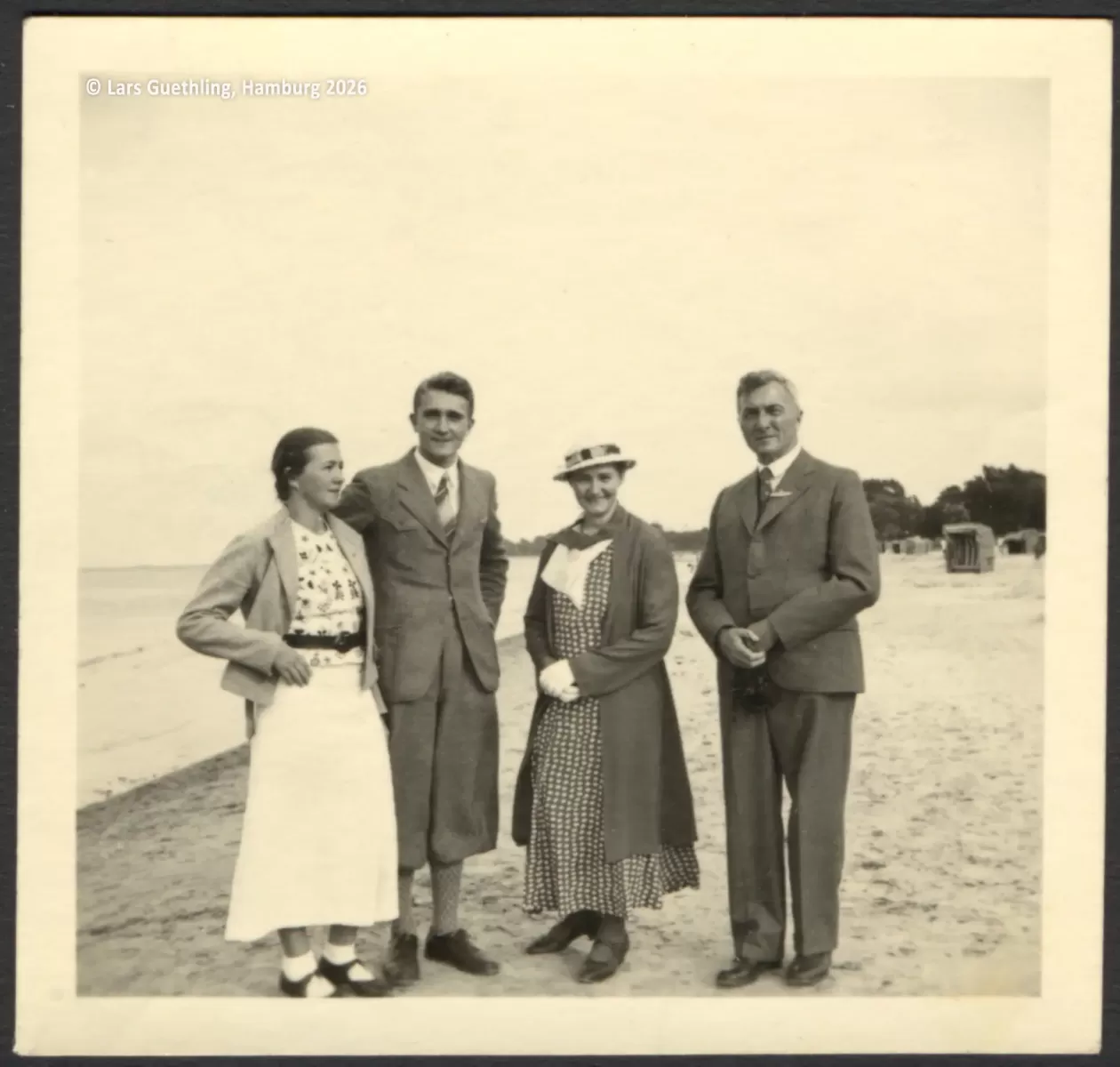
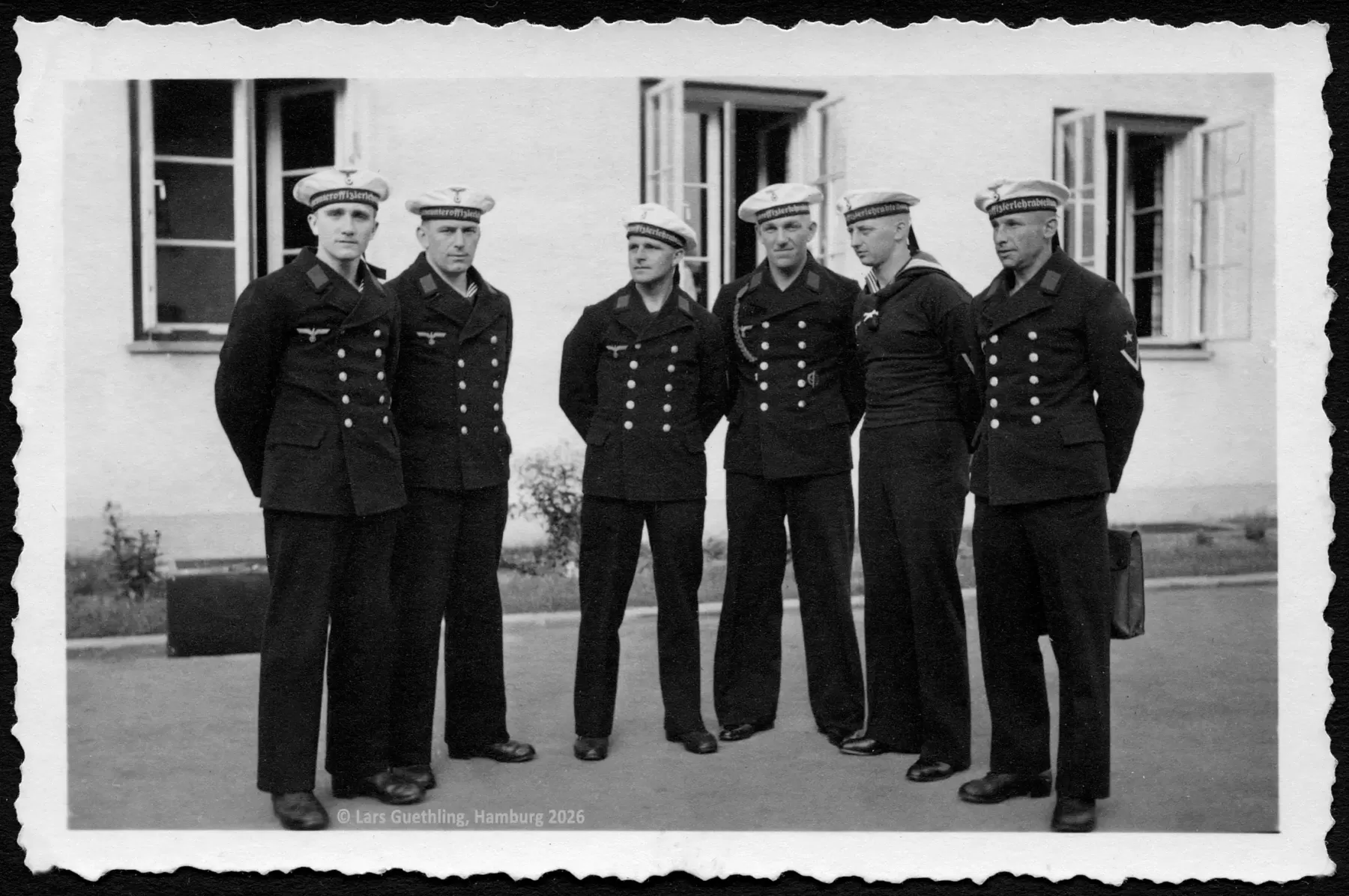
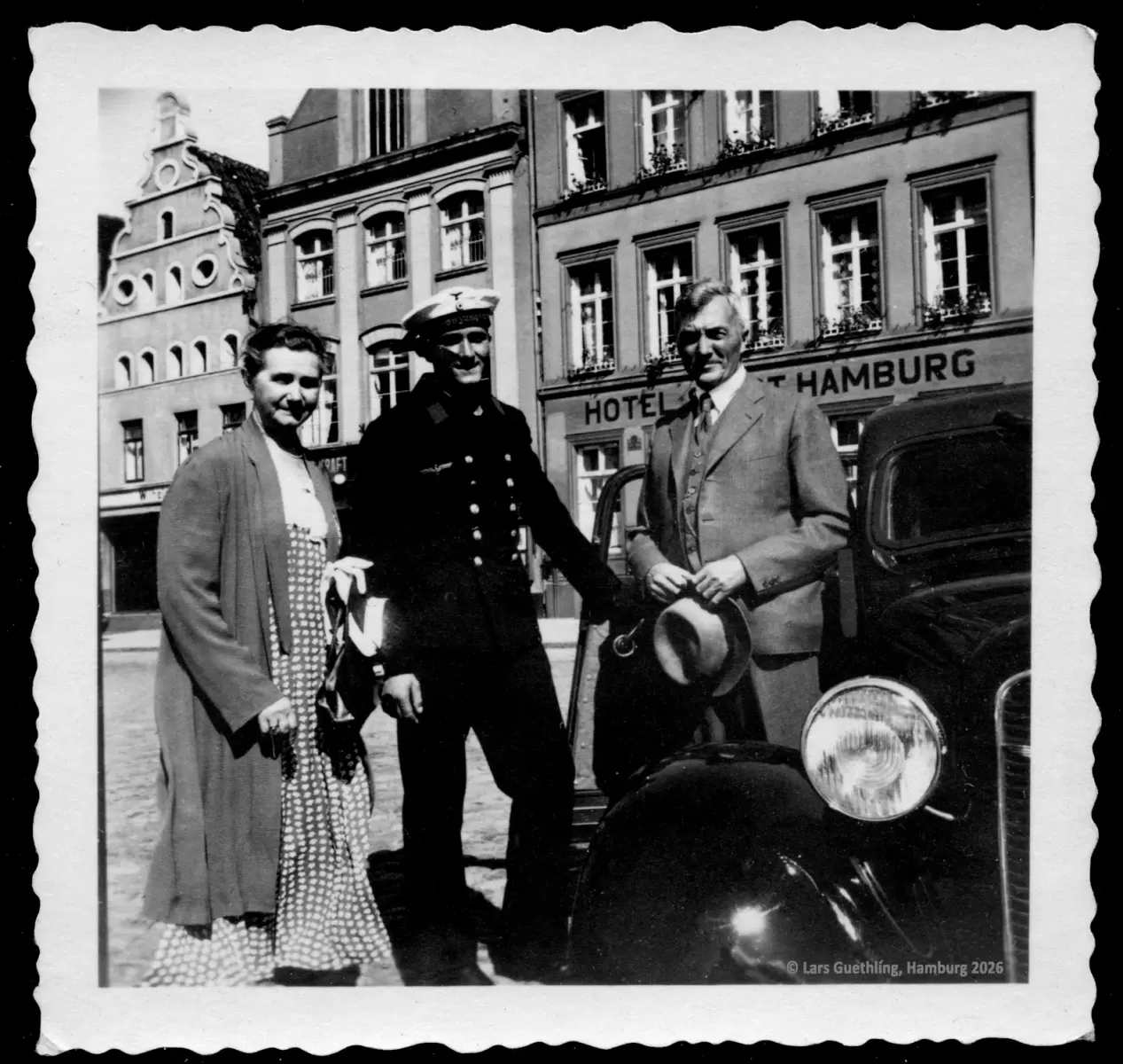
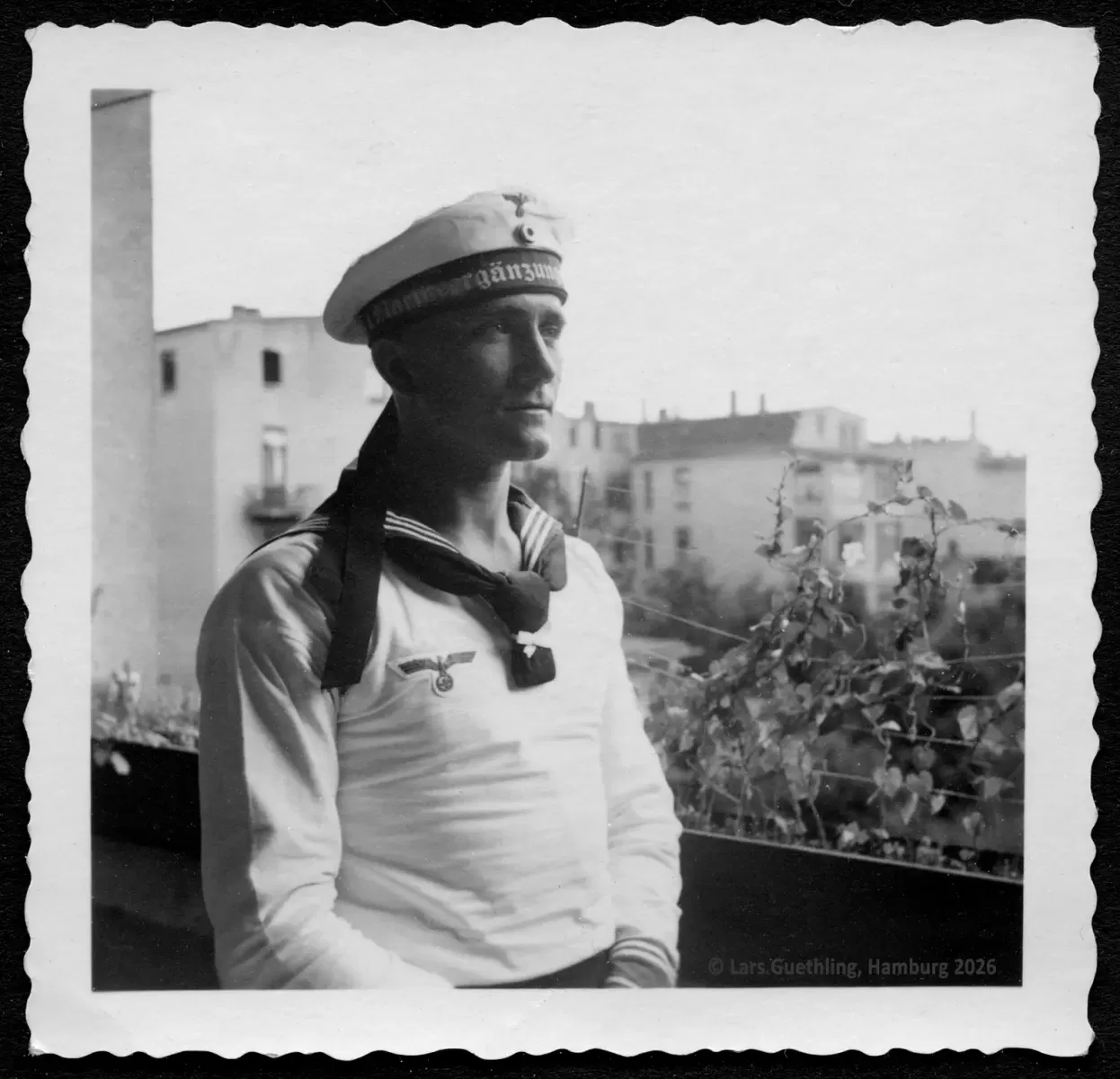
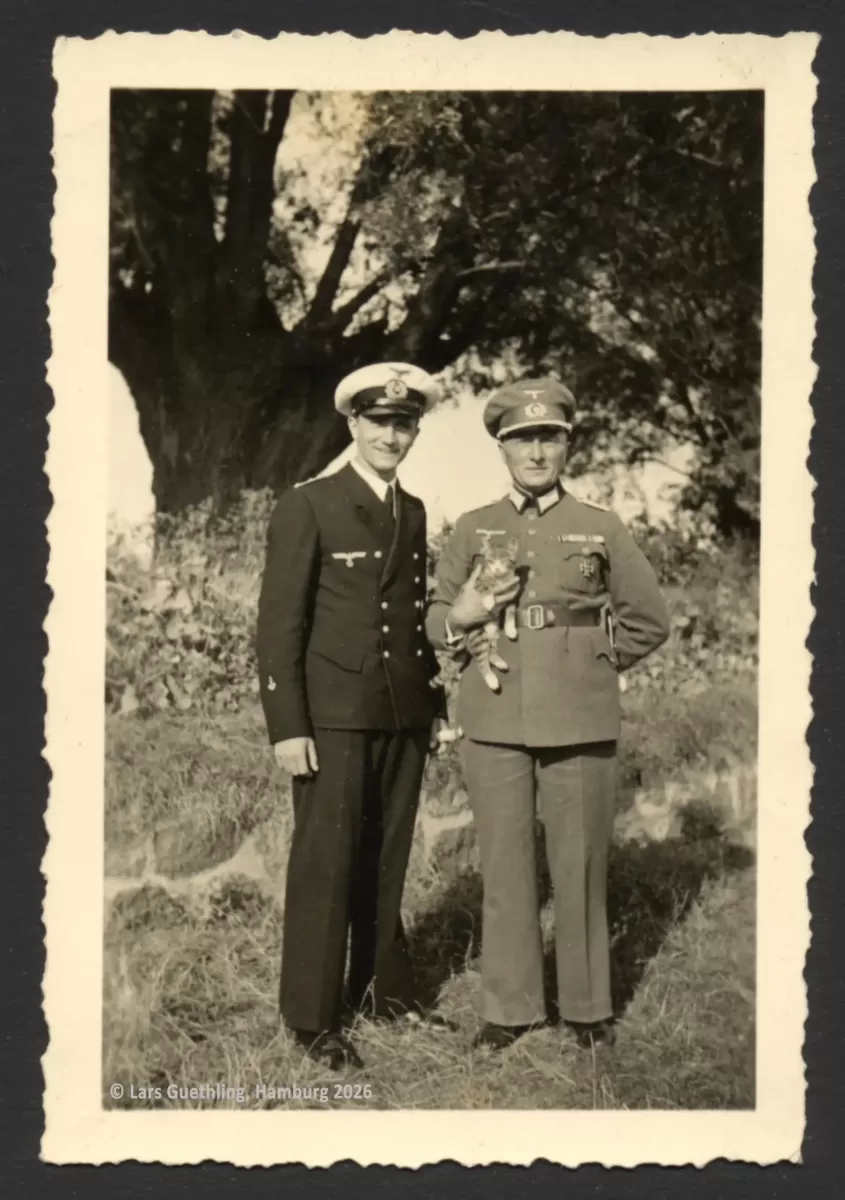
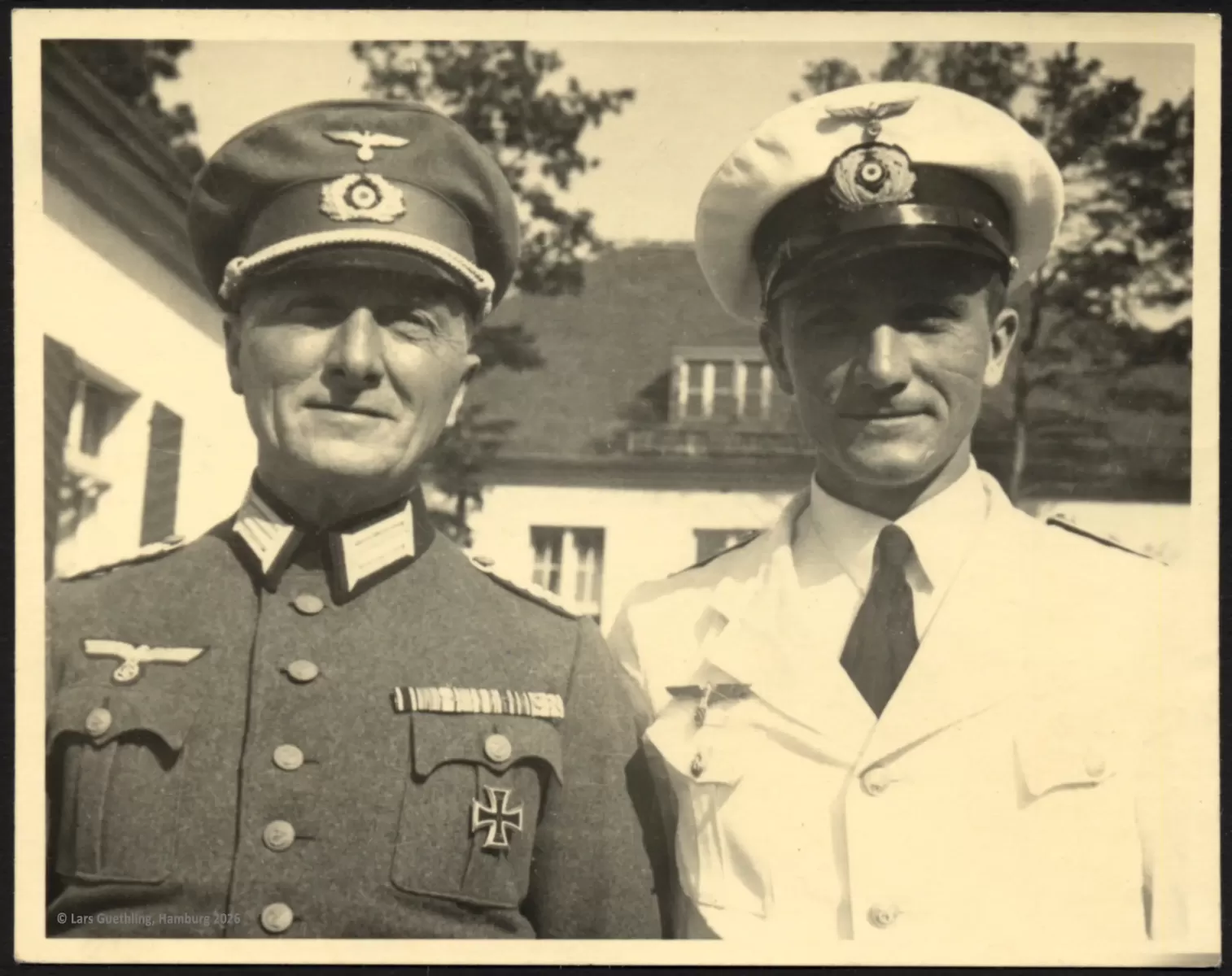
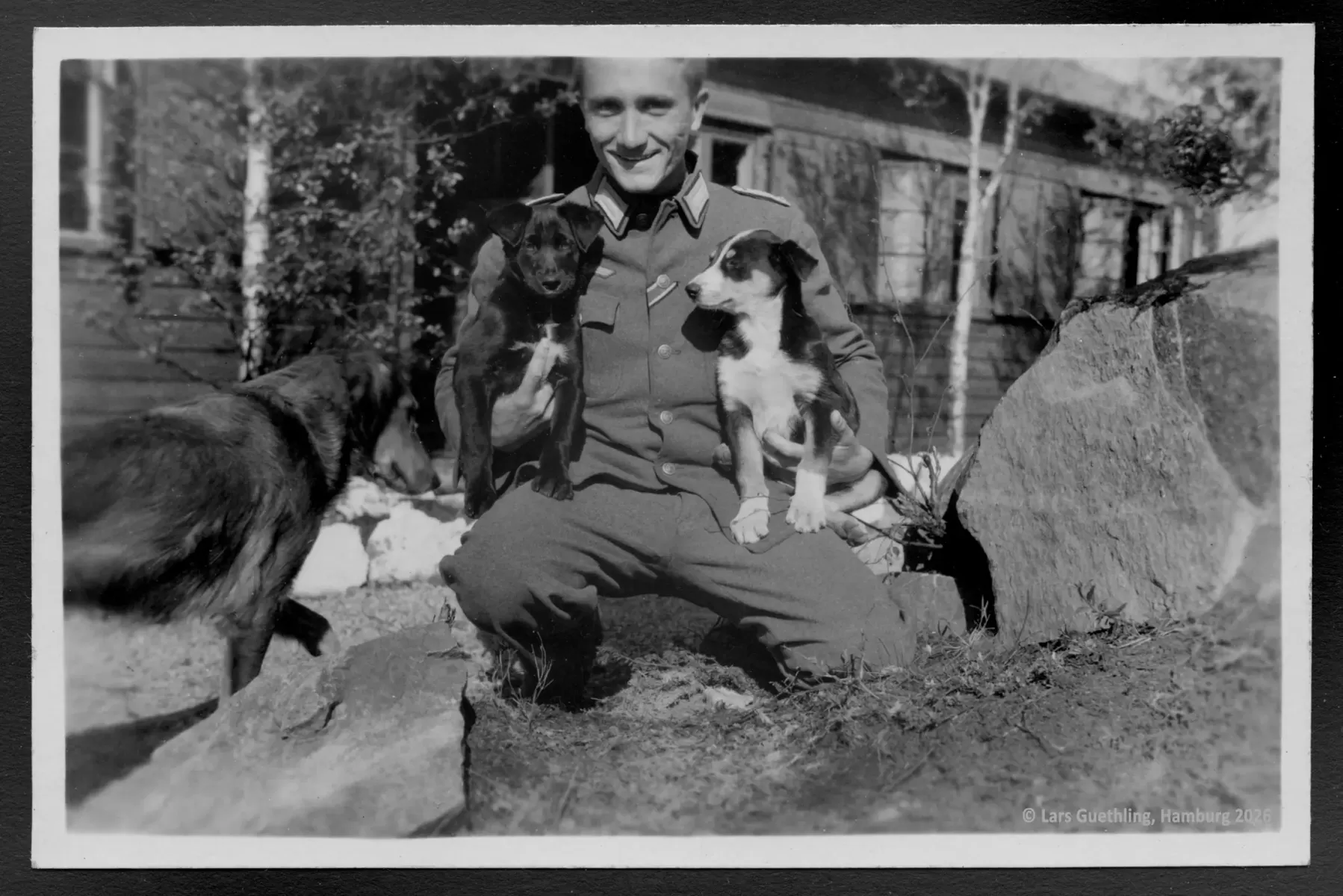
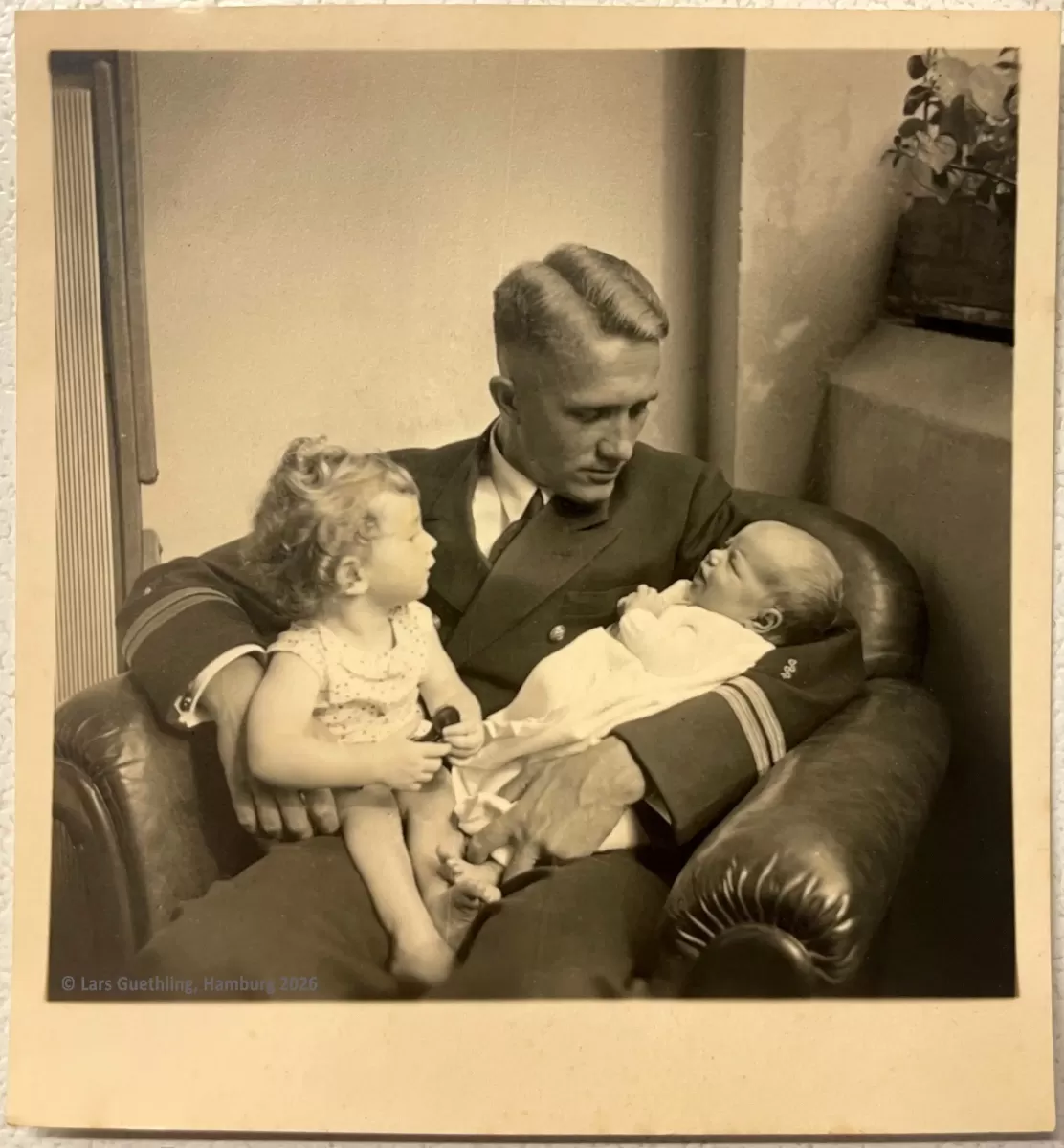
Lars Güthling also contributed a larger photographic collection documenting the Esau family, Ernst Christian’s life, and his naval service.
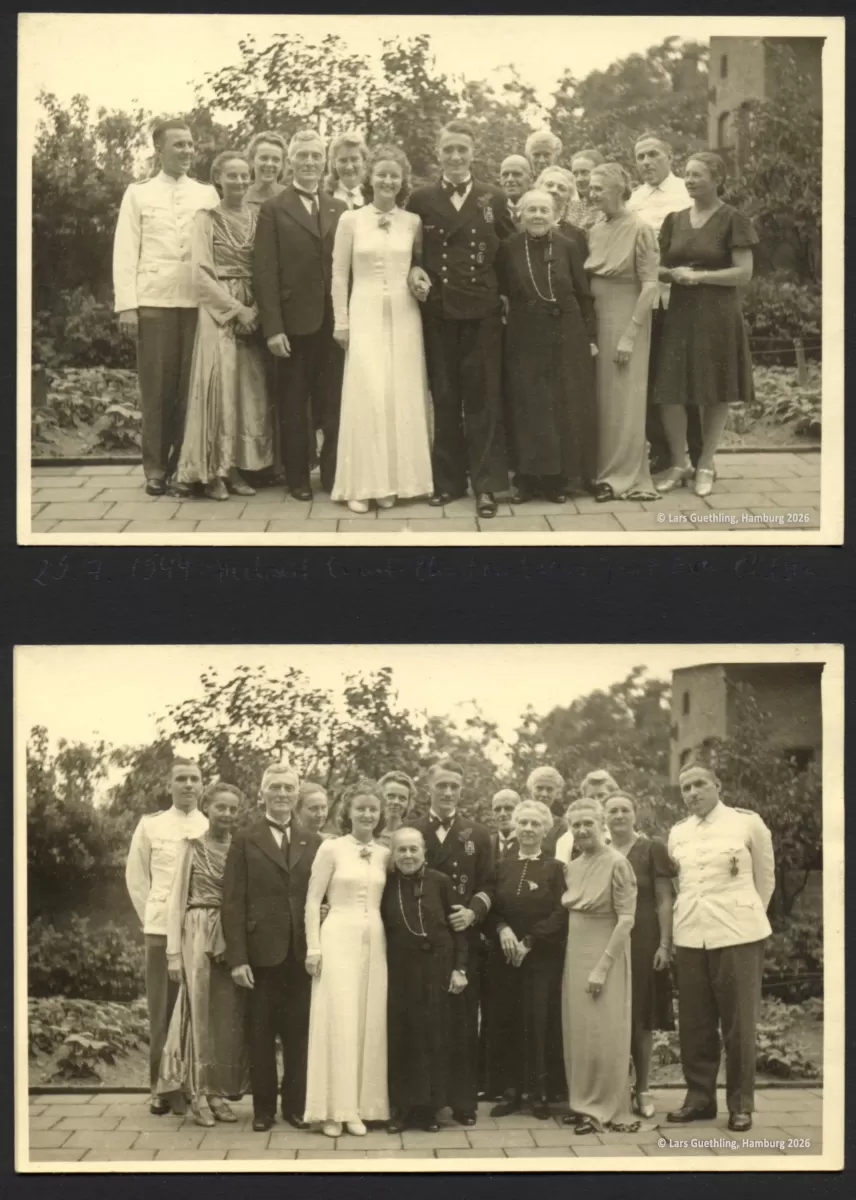
Photograph Descriptions
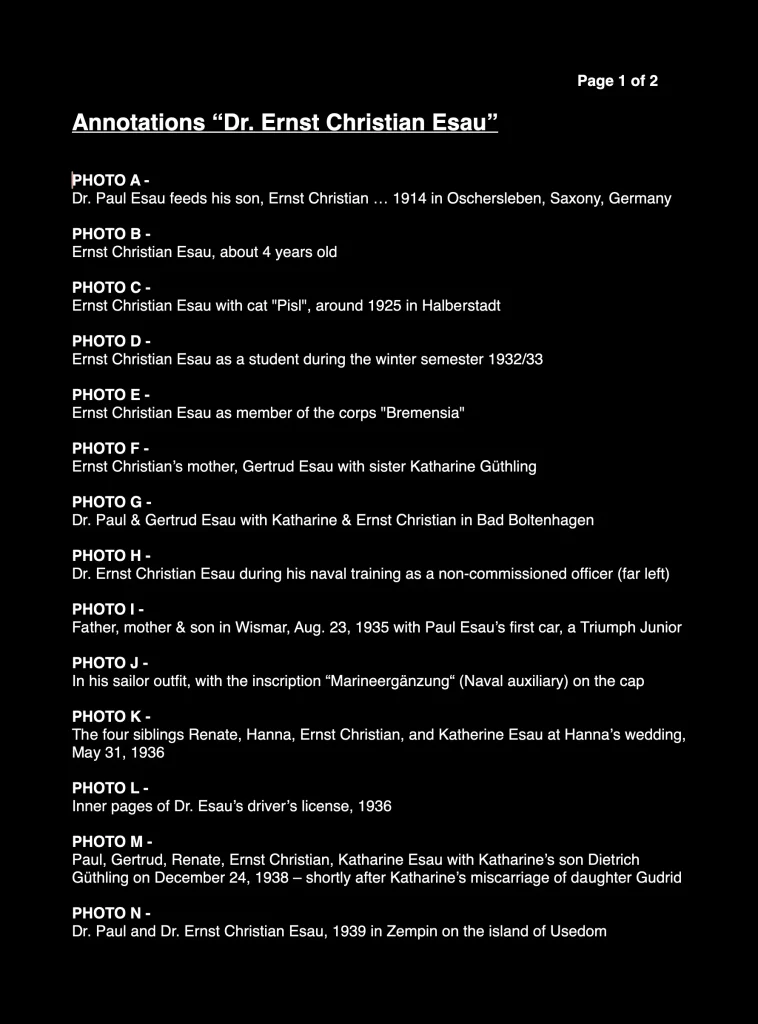
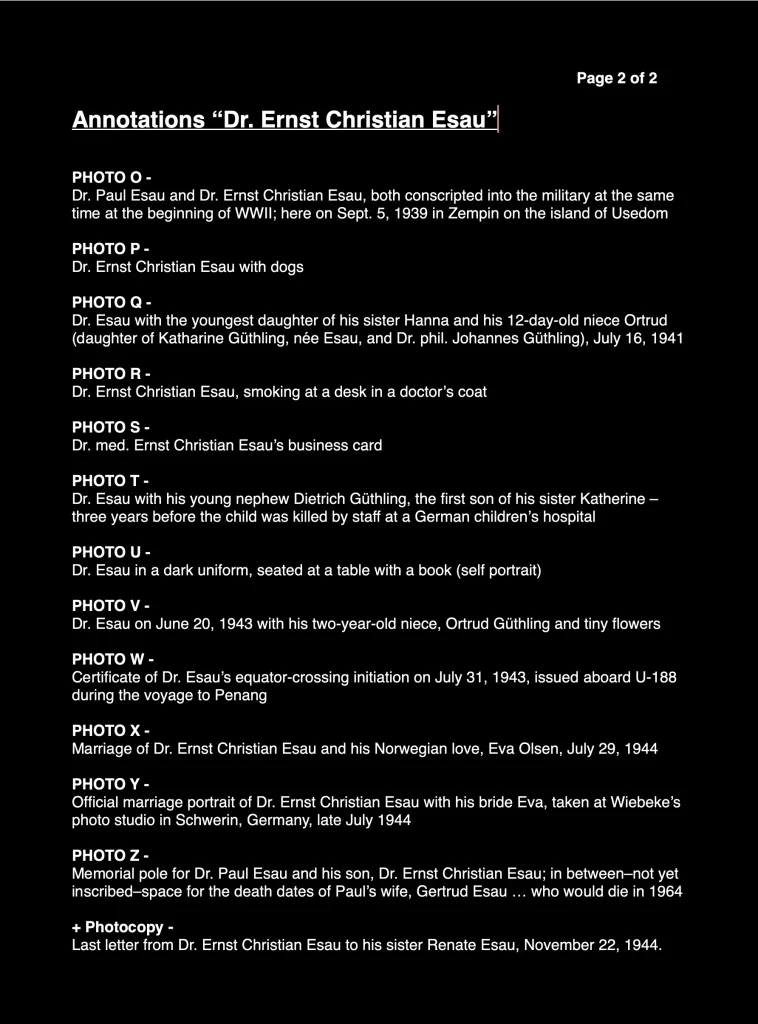
The following pages provide additional descriptions of the historical photographs and documents from Lars Güthling’s family archive.